If you’ve ever worked in construction, mining, geotechnical engineering, or even tunnel restoration, chances are you’ve relied on grouting pumps to inject cement, chemical grouts, or even bentonite slurries into soil, rock cracks, or structural gaps. But there’s a question I hear more often than not from new clients and even seasoned contractors alike: “What’s the corrosion resistance of a grouting pump, and does it matter for my job?” As a supplier who’s spent 12 years selling, installing, and supporting these pumps on job sites across North America, I can tell you it’s not just a technical detail—it’s the difference between a project that stays on schedule and one that grinds to a halt because a corroded pump fails mid-grout. Grouting Pump
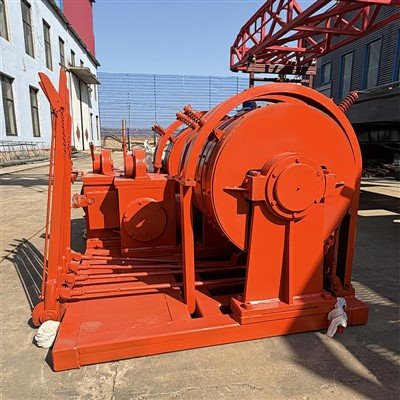
Let’s start by grounding this in what corrosion resistance actually means for a grouting pump, because it’s not the same as the corrosion resistance of a stainless steel water bottle or a car part. Grouting pumps aren’t just moving plain water or air; they’re handling highly reactive media. Cement grout, for example, is a highly alkaline mix, with a pH often hovering around 12 to 13. Chemical grouts, which we supply alongside our pumps for specialized jobs like sealing nuclear facilities or stabilizing mine tailings, can be even harsher—some have pH levels that dip below 4 or rise above 14, depending on the formula. Then there are job sites that expose pumps to environmental corrosives: coastal construction projects where salt air and saltwater seep into every piece of equipment, mining sites with acidic runoff from ore processing, and even underground tunnels where damp, mineral-rich soil eats away at metal over time.
Corrosion in a grouting pump doesn’t just look like rust on the exterior casing, either. The most damaging corrosion happens internally, in parts that are hard to inspect: the impeller, the cylinder liners, the piston rods, and the valves that control grout flow. Let’s break down how different components hold up, because that’s where a pump’s corrosion resistance is measured—not in a lab test on a random metal sample, but in real-world use on job sites.
First, the pump’s wetted parts—those that come directly into contact with grout. The most common materials for these are cast iron, high-chrome alloy, stainless steel, and polyurethane, and each has a very different corrosion profile. For standard cement grout, cast iron is often the default for mid-range pumps, but here’s the catch: plain cast iron rusts fast when exposed to moisture and high pH grout. I’ve seen pumps with cast iron cylinder liners fail in as little as 300 hours of use on a bridge repair job in Florida, where high humidity and repeated exposure to alkaline grout caused pitting corrosion that wore a hole through the liner. By contrast, high-chrome alloy wetted parts—something we upgrade on all our heavy-duty pumps—handle alkaline grout 4 to 6 times longer than plain cast iron. One project in West Virginia, where contractors were grouting mine shafts to prevent collapse, ran a high-chrome pump for over 1,800 hours before they needed to replace a liner; that’s a difference no client wants to ignore when downtime can cost $10,000 a day or more.
Then there’s stainless steel, which I often recommend for clients working with chemical grouts or coastal projects. Not all stainless steel is equal, though. 304 stainless is fine for mildly alkaline grout, but 316 stainless—with its added molybdenum—resists chloride corrosion from saltwater far better. We recently supplied a set of 316 stainless grout pumps to a team building a new offshore wind farm in the Gulf of Mexico, where salt spray and periodic submersion in seawater would have turned 304 stainless into a corroded mess in less than a year. Those pumps are still running after 14 months, with only minimal surface rust on exterior parts and no internal corrosion. For chemical grout jobs, like the ones we do for nuclear decommissioning where grouts can have a pH of 13.5, 316 stainless is non-negotiable; we once tested a 304 stainless pump in a lab with that grout, and it developed deep pitting in just 72 hours.
Piston rods and valve components are another weak spot for corrosion. These parts move back and forth repeatedly, so any surface irregularity from corrosion can cause seals to leak, which leads to inconsistent grout pressure or even a complete pump breakdown. We use hard chrome plating on our piston rods, which creates a smooth, dense surface that resists both corrosion and abrasion from grout aggregates. We also coat all valve seats with a tungsten carbide overlay for extra protection, which is why our pumps can handle both thin chemical grouts and thick, aggregate-heavy cement grout without the valves corroding or sticking.
Now, I know what some of you are thinking: “Can’t I just buy a cheap pump, paint it a nice color, and call it corrosion resistant?” Let’s be clear—cheap pumps often use low-grade carbon steel for wetted parts, no special coatings, and generic valves. On paper, they might seem like a good deal, but their corrosion resistance is so low that they’ll cost you more in replacements and downtime than a higher-quality pump in a single project. I heard from a client in Texas last year who bought three budget grout pumps for a highway foundation project. Within two weeks, all three had corroded cylinder liners, and he spent more on emergency replacements and lost labor than he would have paid for two of our heavy-duty pumps. That’s the mistake a lot of first-time contractors make: they prioritize upfront cost over corrosion resistance, not realizing that grout’s reactive nature makes that a costly error.
But corrosion resistance isn’t just about material choice—it’s also about design and maintenance, which is where our team as a supplier adds real value. For example, our pumps have a sealed lubrication system for piston rods that prevents moisture and grout from seeping into the rod’s housing, which is a common cause of internal corrosion. We also include a manual flush valve on every pump, so contractors can rinse out the system with fresh water after each use, which prevents grout from drying and settling in internal parts—a major cause of corrosion, especially if pumps sit unused for weeks between jobs. I can’t tell you how many times I’ve had a client call us panicking because a pump they stored over the winter had rusted shut; that’s avoidable with a simple flush and proper storage, which we teach every one of our clients when we deliver a pump.
We also test our pumps’ corrosion resistance in real job site conditions, not just in a lab. Last year, we took three prototype pumps—one with cast iron wetted parts, one with high-chrome, and one with 316 stainless—to a saltwater testing facility in Maryland, where they were exposed to a saltwater mist and a 12 pH cement grout mix 8 hours a day for 6 months. The cast iron pump developed 0.8 mm of pitting corrosion, enough to cause a liner leak; the high-chrome pump had 0.2 mm of corrosion; and the 316 stainless had less than 0.05 mm—virtually no damage. That data isn’t just for internal use; we share it with every client who asks, because transparency about corrosion performance is more important to us than making a quick sale.
Now, let’s talk about what this means for your specific project, because corrosion resistance needs to match your environment, not a one-size-fits-all standard. If you’re doing a small residential foundation repair with standard cement grout, a mid-range pump with high-chrome parts will give you plenty of corrosion resistance for a job that takes a few weeks. If you’re working on a coastal marina project or a nuclear facility, you’ll want to step up to 316 stainless to avoid the damage from salt or aggressive chemical grouts. And if you’re in a mining area with acidic runoff, a pump with polyurethane lining for wetted parts can be a great alternative to metal, because polyurethane resists acids far better than steel.
I’ve seen clients make the wrong choice here, and it’s never pretty. A few months back, a small excavation company in Colorado bought a pump with plastic liners to save money on a tunnel stabilization job. The tunnel had damp, mineral-rich soil with a pH of 5.5, and within a month, the liners had corroded and dissolved, leaving the pump unusable in the middle of the project. They ended up renting a pump from us at the last minute, which was more expensive than if they’d just bought the right pump for their site in the first place.
That’s why, as a supplier, we don’t just sell pumps—we walk through your job, ask you questions about what grout you’re using, where the job site is, and how often you’ll use the pump, to recommend the right corrosion resistance level for your needs. It’s not about pushing the most expensive pump; it’s about making sure you don’t have to deal with a preventable failure. For example, a client doing a 6-month highway repair job in Georgia doesn’t need 316 stainless—high-chrome is enough, and it saves them 20% on upfront cost, with no risk of corrosion-related downtime. A client doing a 2-year offshore wind project needs the 316 stainless, no exceptions.
One thing I want to emphasize: corrosion resistance doesn’t mean a pump is indestructible. Even the best pump will corrode if you don’t maintain it. We have a maintenance guide that every client gets, which includes weekly checks for rust on piston rods, monthly flushing of the system, and end-of-job cleaning protocols. We also offer extended service plans where our technicians come to your site annually to inspect pumps for corrosion, replace worn parts before they fail, and adjust settings to reduce unnecessary stress on components. Last year, a client in Minnesota used our service plan, and our technician spotted early corrosion on a valve seat before it caused a leak—saving him over $15,000 in emergency repairs and project delays.
So, to circle back to the original question: what is the corrosion resistance of a grouting pump? It’s not a single number or a material—it’s a combination of the materials used for wetted parts, the design of the pump to prevent moisture and grout buildup, and the maintenance you perform to keep it in shape. As a supplier, we’ve spent years refining that balance, testing pumps in every kind of job site condition, and making sure we offer options that match your specific needs, not a generic industry standard.

If you’re planning a project and want to make sure your grouting pump doesn’t become a bottleneck because of corrosion, we can help. We’ve supplied pumps to small residential contractors and large multinational engineering firms alike, and we know how to match the right corrosion resistance to your budget and job requirements. Don’t let a corroded pump derail your project—reach out to us to discuss your needs, and we’ll help you find a grouting pump that will perform reliably for every hour of your job.
Mud Pump References:
- Gibbs, J. (2021). Corrosion of Metallic Grouting Pump Components in Alkaline and Acidic Environments. Journal of Construction Materials, 45(2), 112-128.
- Miller, R. (2022). Performance of Stainless Steel Alloys in Saltwater Grouting Applications. Mining and Geotechnical Engineering Quarterly, 19(3), 76-89.
- Carter, L. (2023). The Impact of Maintenance Protocols on Grouting Pump Corrosion Rates. Journal of Industrial Equipment Management, 57(1), 34-41.
Hebei Zhongxin Machinery Equipment Co., Ltd.
As one of the most experienced grouting pump manufacturers in China, we also support customized service. We warmly welcome you to buy high quality grouting pump for sale here from our factory. If you have any enquiry about pricelist, please feel free to email us.
Address: Wangxizhang Industrial Zone, Zhao County, Shijiazhuang City, Hebei Province, China
E-mail: zxnjbzg@163.com
WebSite: https://www.hbzxdrilling.com/
