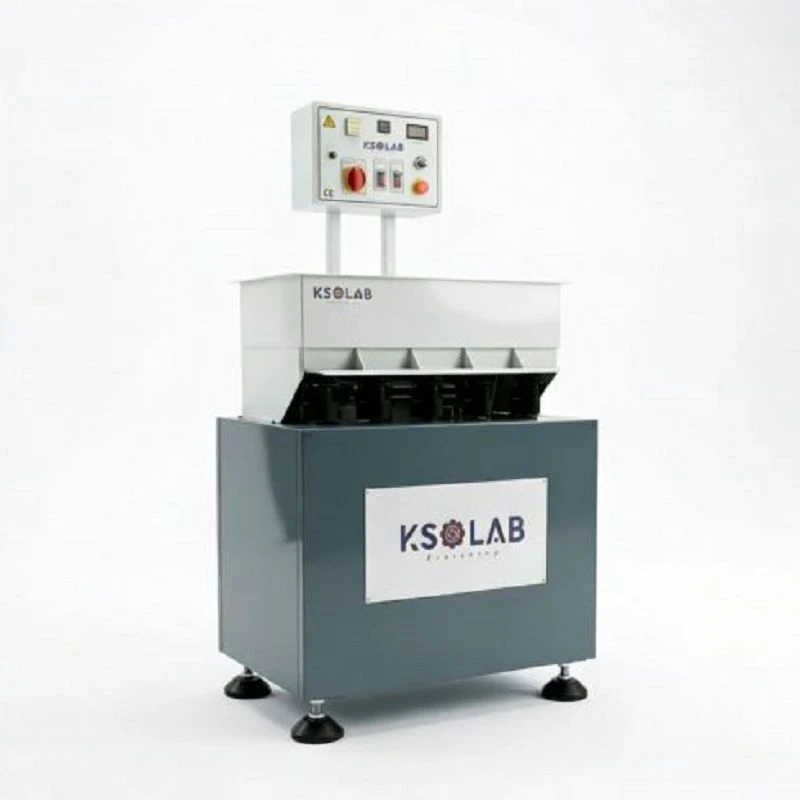
As a magnetic polishing machine supplier who’s spent the last decade working directly with manufacturers across automotive, 3C electronics, medical device, and precision machining industries, I’ve lost count of how many times customers have asked: “Why does two identical parts run through the same magnetic polishing machine and come out with totally different surface finishes?” The answer isn’t a glitch in the machine—it’s a mix of interconnected, often overlooked factors that go far beyond just hitting “start” on a control panel. Today, I’m breaking down the most critical variables that shape polishing quality, from the parts themselves to machine setup and consumable choices, with real-world examples we’ve seen firsthand at our facility. Magnetic Polishing Machine
First, let’s start with the thing you’re actually polishing: the workpiece itself. Most people assume a part’s material is the main driver, but even within the same material grade, differences can derail results. Take 316L stainless steel, the go-to for medical implants and watch components. We recently had a customer polishing small pacemaker housings: one batch milled at 10,000 RPM with a sharp tungsten carbide tool came out with a uniform 0.2 Ra surface, while another batch milled at 5,000 RPM with a worn tool had micro-burrs and inconsistent material grain structure. Magnetic polishing works by using moving magnetic abrasive particles to erode tiny peaks and burrs from a surface; if the base workpiece has uneven hardness or surface defects (like tool marks or residual stresses from machining), the abrasives will react differently across the part. A softer, milled peak will erode faster than a harder, compressed grain at the base, leaving a lopsided finish. We recommend customers test a small sample of their workpiece material first—something as simple as a Rockwell hardness test can catch inconsistencies before you run a full production batch.
Next, workpiece size and geometry are non-negotiable factors, yet they’re often the first thing people skip. Magnetic polishing relies on the magnetic abrasive brush (a tangled chain of tiny, iron-based magnetic particles and abrasive grains) conforming to the part’s shape. For a flat, 2-inch circular aluminum disc, that’s easy: the brush makes full contact evenly across the surface. But for a complex, 3D medical component like a bone screw with threaded flutes, or a smartphone camera lens mount with tight internal corners, gaps form between the brush and hard-to-reach areas. We had a automotive customer polishing 10mm internal bores for hydraulic valves last year; they tried a standard magnetic polishing rig made for external parts and ended up with 1 Ra on the outer diameter but 5 Ra on the inner bore because the brush couldn’t penetrate the narrow, deep cylinder. The fix wasn’t a new machine—it was a custom magnetic pole setup with a smaller, denser brush that could reach the bore’s base geometry. Geometry also includes sharp edges: if a part has a 90-degree edge, the magnetic brush will concentrate its force there, leading to over-polishing or even edge breakdown, whereas radiusing edges (even a tiny 0.1mm radius) distributes the force evenly.
Moving to the machine itself: the magnetic circuit design and operating parameters are the biggest levers you can adjust, and small tweaks make huge differences. Magnetic polishing machines generate the magnetic field that turns abrasive particles into a controllable brush, so the strength and pattern of that field matter. Weak magnetic fields can’t hold the abrasive particles tight, leading to loose grains that scratch the part or no material removal at all; too strong a field, and the brush becomes too dense, unable to flex into complex parts, or generates too much friction that overheats the workpiece. We see this all the time with new customers who use a generic machine meant for large parts on small, delicate 3C components: a 1200 Gauss field for a 2-inch disc is fine, but a 500 Gauss field is perfect for a 10mm mobile phone keypad button, preventing overheating that would warp the thin part.
Then there’s the machine’s motion parameters, which are just as critical. Most magnetic polishing machines let you adjust rotation speed (both the work bowl and the workpiece itself), feed rate, and oscillation. If you polish a part too fast, the magnetic brush doesn’t stay in contact long enough to remove material, resulting in a dull, uneven finish; too slow, and you risk over-polishing, especially on soft materials. For titanium parts used in aerospace, we typically run the work bowl at 15 RPM and oscillate the workpiece at 3 mm per second, balancing material removal rate with finish quality. We had an aerospace customer try 40 RPM on titanium turbine blades and ended up with micro-cracks because the brush was bouncing too quickly, instead of smoothly abrading the surface. Another often overlooked motion parameter is workpiece orientation: polishing a long metal rod horizontally leads to gravity pulling the magnetic brush down, creating an uneven finish on the bottom half; orienting it vertically ensures the brush wraps evenly around the entire surface.
Now, the consumables that are the “working arm” of the machine: magnetic abrasive particles (MAPs). Not all MAPs are created equal, and choosing the wrong type is one of the most common causes of polishing failures. MAPs are usually a mix of ferromagnetic particles (like iron powder) and abrasive grains (aluminum oxide, silicon carbide, or diamond, depending on the material being polished). The size and type of abrasive grain, as well as the ratio of magnetic to abrasive material, dictate how aggressively the brush cuts. For soft materials like copper or aluminum, using a 10-micron aluminum oxide abrasive will give a smooth, scratch-free finish without gouging; for hard materials like tungsten carbide or ceramic, you need a 3-micron diamond abrasive to achieve a mirror finish. We once had a customer polishing hard drive platters with generic MAPs meant for stainless steel, and they ended up with deep scratches because the abrasive grains were too large and too hard for the thin, delicate platter surface. MAPs also have a lifespan: over time, abrasive grains break down, and iron particles become coated in worn material, reducing their cutting power. We recommend replacing MAPs every 500–1000 production hours, depending on workpiece material, to maintain consistent quality.
Wait, I should also mention the processing environment, which people often dismiss. Temperature, lubrication, and debris buildup all play a role. Magnetic polishing generates friction between the brush and the workpiece, so without proper lubrication, the heat can warp soft metals or cause abrasive grain embedding in the workpiece surface. For example, polishing thermally sensitive polymers (used in some consumer electronics) without a water-based lubricant leads to melting and surface deformation. Lubrication also prevents debris from machining processes (like metal shavings or tool fragments) from mixing into the MAPs, which would scratch subsequent parts. We use a pH-neutral water-based lubricant for most applications, adjusting the mix ratio based on workpiece size: smaller parts need a thinner lubricant to let the brush move freely, while larger parts need a thicker lubricant to reduce friction. Humidity is another factor: too much moisture can cause the iron particles in MAPs to rust, making the brush clump and unevenly distribute force, leading to spotty finishes.
Let’s tie this back to a real case to show how these factors interact. Last quarter, a medical device manufacturer came to us with a problem: they were polishing orthopedic knee implants, and half the batch had a Ra of 0.3 while the other half was at 1.2 Ra, well above their required spec. They’d tried adjusting machine speed, MAP type, and lubrication with no luck. When we visited their facility, we first tested their workpiece material: the 316L stainless steel had a 5-point hardness variation across the batches, caused by inconsistent heat treatment from their supplier. Next, we checked their machine: they were using a 1000 Gauss field for a part that required 700 Gauss, which was too strong, leading to over-polishing on the softer parts. Finally, we noticed their MAPs were 300 hours old, with worn abrasive grains that couldn’t handle the inconsistent material hardness. The fix: working with their material supplier to standardize heat treatment, adjusting the magnetic field strength down to 700 Gauss, and replacing the MAPs. Within two weeks, their batch uniformity jumped to 95% meeting the 0.5 Ra spec. That case drove home how these factors don’t work in isolation—one variable alone couldn’t fix the problem, but adjusting all three did.
At the end of the day, magnetic polishing quality is a balance between part characteristics, machine setup, consumable selection, and process environment. If you’re struggling with inconsistent finishes, the first step isn’t to upgrade your machine—it’s to audit these factors. Whether you’re polishing tiny precision components or large industrial parts, getting each of these variables right will save you time, reduce scrap, and deliver consistent results.
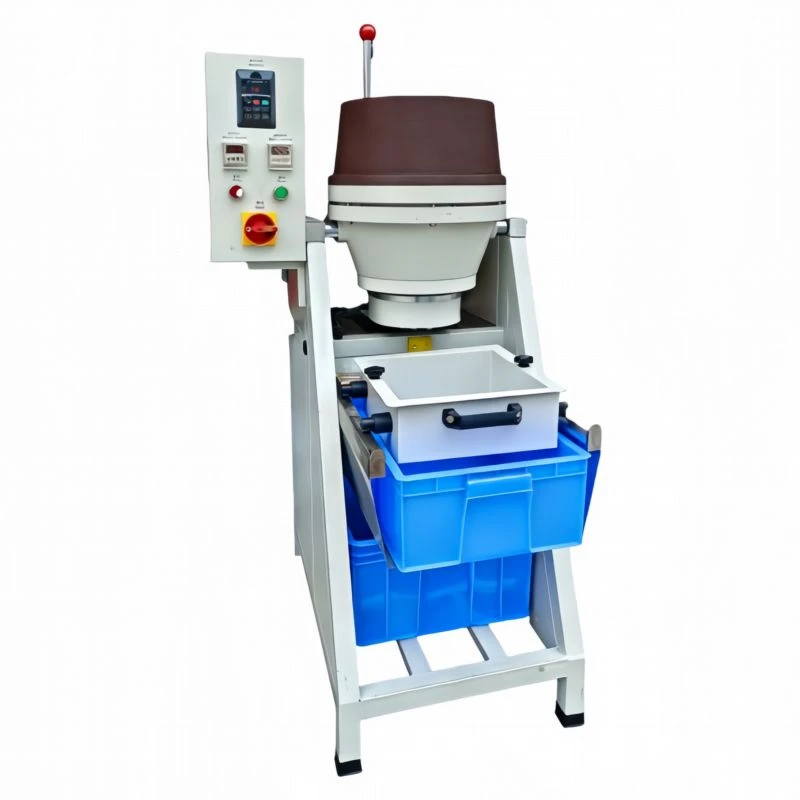
If you’re currently refining your magnetic polishing process, or looking to adjust parameters for your specific workpieces, our team has decades of experience across industries and can help you test, calibrate, and optimize your setup. We’re here to work with you to find the right solution for your production needs, so you can get the high-quality finishes your customers expect.
Dryer References
- K. Singh, and V. K. Jain, “Magnetic field assisted finishing processes: a review,” Proceedings of the Institution of Mechanical Engineers, Part B: Journal of Engineering Manufacture, vol. 223, no. 12, pp. 1517–1540, 2009.
- M. A. El-Tawil, and A. A. El-Danaf, “Effect of process parameters on surface roughness in magnetic abrasive finishing of stainless steel,” Journal of Materials Processing Technology, vol. 186, no. 1–3, pp. 111–117, 2007.
- S. S. Abouelatta, and M. G. El-Borgi, “Optimization of magnetic abrasive finishing parameters for surface roughness improvement,” International Journal of Machine Tools and Manufacture, vol. 45, no. 14, pp. 1622–1628, 2005.
KS Lab Finishing Co., Ltd.
As one of the most professional magnetic polishing machine manufacturers in China, we also support customized service. We warmly welcome you to wholesale durable magnetic polishing machine made in China here from our factory. If you have any enquiry about pricelist, please feel free to email us.
Address: No.11-14, Yantian Shuibei Commercial Street, Fenggang Town,Dongguan,China
E-mail: sales@kslabfinishing.com
WebSite: https://www.kslabfinishing.net/
