Hey everyone, let’s cut to the chase—if you’ve ever worked in manufacturing, wastewater management, food & beverage, or even automotive fluid systems, you’ve definitely seen a float level sensor at work. It’s that unassuming little device sitting inside a tank, silently doing its job so you don’t have to climb around checking levels every 10 minutes. As someone who’s been supplying these things for years, I get that most people who reach out to me aren’t looking for a super technical thesis—they need the straight dope on how they actually work, why they’re way more reliable than those clunky old dip sticks, and why picking the right one for your setup isn’t something to mess up. Let’s break this down like we’re chatting over a coffee, no jargon overload, promise. Float Level Sensor
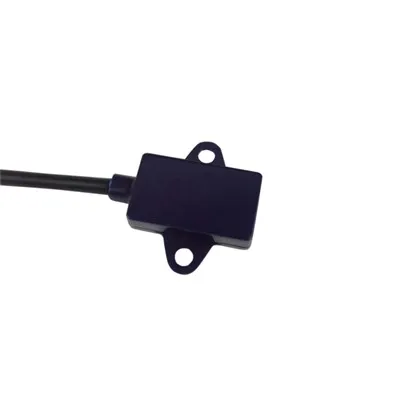
First off, what even is a float level sensor, for anyone new? It’s a simple, passive tool designed to monitor liquid levels in a closed or open tank—no fancy wiring for power-hungry tech, no need to lower a stick in every hour. At its core, it relies on one of the most basic rules of physics we learned in middle school: buoyancy. That’s the thing that makes a rubber duck float instead of sinking, right? The sensor uses that same force, but turns it into a usable signal that tells you if your tank is full, empty, or somewhere in between.
Let’s keep the parts super simple, no overcomplicating. Most basic float level sensors have just three main pieces: the float itself, the arm or rod connecting the float to the switch, and the switch assembly mounted on the top of the tank. The float is usually made of plastic (like HDPE, it’s tough, doesn’t rust or absorb liquid, perfect for all kinds of chemicals) or sometimes stainless steel if you’re dealing with super high temperatures or corrosive stuff. It’s shaped like a little cylinder or oval, so it doesn’t tip over easily, even when the liquid is sloshing around from pumps or fill lines.
Here’s where the magic happens. When the tank is empty, the float hangs low, right at the bottom. As you fill the tank up, the liquid level rises, and that buoyant force kicks in. The float pushes up with the liquid, and that movement travels down the arm to the switch. Now, there are two main types of switches we use—magnetic and mechanical—those are the ones that actually send the signal. Let’s talk magnetic first, because that’s the most common these days, way less likely to break. Inside the float, there’s a tiny magnet. The switch assembly has two reed switches—thin, flexible metal contacts that only connect when a magnetic field is near them. So when the float rises to the “full” position, the magnet lines up with the top reed switch, that closes the circuit, and your control panel gets a signal that says “tank’s full, turn off the fill pump.” If it drops to the “low” position, the magnet hits the bottom reed switch, opens the circuit, and alerts you to add more liquid, or shut down equipment to prevent running dry.
The mechanical ones are a holdover, still used sometimes for really basic setups. Instead of a magnet, the arm has a little bump that hits a physical lever on the switch. When the float hits the right height, the lever flips, opening or closing the circuit. These are cheaper, but they’re way more prone to wear—if the tank has a lot of sediment, that sediment can gunk up the lever and make it stick, which leads to wrong readings. Magnetic ones don’t have that problem, since the magnet and reed switch are sealed inside plastic housings, no contact with the liquid, so they last way longer. That’s why almost all our clients ask for magnetic ones now, unless they’re on a super tight budget for a temporary setup.
Wait, let’s talk about the different configurations too, because not all float level sensors are one-size-fits-all. Some are point-level sensors—those are the ones that only tell you when the liquid hits a specific height, like “too low” or “too full.” Those are perfect for small tanks, sump pumps, or portable containers. Then there are continuous-level sensors, which track the exact level as it rises or drops, so you can see a number on your display, like “120 gallons remaining” or “3 feet left.” Those use the same buoyancy principle, but the arm is connected to a potentiometer—wait, don’t panic, that’s just a simple resistor that changes its value as it moves, so the control panel can convert that movement into an exact level. We make both, obviously, and I always ask clients to tell me what they need it for before recommending one. No sense selling a fancy continuous sensor if all you need is to make sure your sump pump doesn’t flood the basement.
Now, let’s get real about why these are still the go-to, even in the age of ultrasonic sensors and radar. Yeah, ultrasonic works, it bounces sound waves off the liquid surface, but it can be thrown off by foam, dust, or sloshing, especially in large tanks. Radar is better, but it’s way more expensive, and overkill for a lot of small to mid-sized setups. Float level sensors? They work in any liquid, as long as the float can sink or rise through it. They don’t care about foam, they don’t need line of sight, they’re not affected by temperature changes (as long as you get the right float material—we sell ones rated for -40°F all the way up to 300°F, so hot oil or cold wastewater is no problem), and they’re way easier to install and repair. If a float breaks, you just swap it out in 5 minutes, no need to call an electrician or calibrate a whole system. I’ve had clients tell me they replaced ultrasonic sensors every year because of calibration issues, and our float sensors have been running for 7 years straight with no maintenance. That’s the real value here.
But hey, they’re not perfect, right? No sensor is. The main thing to watch out for is choosing the right float material. If you’re working with hydrochloric acid, don’t get a regular HDPE float—it’ll dissolve. Get a PVDF float, which is chemical-resistant. If you’re in a food and beverage plant, you need to make sure the materials are food-grade, no leaching chemicals into your water or product—we only use FDA-approved plastics for those applications, no cutting corners. Also, if your tank has super high viscosity liquid, like syrup or heavy oil, make sure the float is buoyant enough to push through that thick stuff. We help clients with that all the time—just send us specs on your tank, the liquid you’re using, and what you need the sensor to do, and we’ll hook you up.
Another thing people don’t think about is the mounting. If you mount the sensor off-center in the tank, sloshing from fill pumps can make the float move around, leading to false signals. We have float sensors with adjustable arms, so you can set the exact height where you want the switch to trigger, or we can mount the assembly to a bracket that sits along the tank wall, so it stays steady even when liquid is moving. For large tanks, we even make multi-point float sensors—they have a series of floats along one rod, so you get alerts at multiple levels, like “half full,” “three-quarters full,” “full.” That’s perfect for storage tanks where you need to track level over a range.
Let me throw in a quick real-world example to make this make sense. Last month, I was chatting with a guy who runs a small food processing plant. He was having constant issues with his sanitizer storage tank—his old ultrasonic sensor kept giving wrong readings because the sanitizer gets foamy when it’s pumped, so he’d either run out and shut down the line, or overfill and waste product. He tried two different brands of sensors, both garbage. We sent him a simple magnetic float level sensor, mounted it on the side of his tank, and he texted me a week later saying it’s been perfect. No more false alarms, he gets an alert when it’s time to restock, and hasn’t wasted a drop of sanitizer in a month. That’s the kind of win I live for as a supplier, not just selling a product, but solving a problem.
Wait, let’s also address the common question: do they need electricity? Most float level sensors are low-voltage, like 12V or 24V, which is standard for industrial control systems, but we also make wireless ones if you don’t want to run wires all the way to your tank. Those use a small battery in the float, and send a signal to your phone or control panel via Bluetooth or LoRa. Perfect for remote tanks, like farm water tanks or well storage, where running power is a hassle. We have a whole line of those now, and they’re super popular with small farmers and rural businesses.
Now, let’s cut through the confusion about different types. Sometimes people mix up float level sensors with other level sensors, so let’s clarify: a float level sensor is always mechanical (or magnetic-mechanical) with that buoyancy core. It’s not a pressure sensor that reads liquid weight, not an ultrasonic, not a radar. It’s simple, it’s reliable, it’s stood the test of time for decades, and that’s why it’s still the most widely used level sensor in the world.
But here’s the thing—even though they’re simple, picking the wrong one can be a huge headache. I’ve seen clients buy cheap knockoff float sensors off Amazon or a random industrial site, and they break in 6 months. The cheap plastic floats crack, the reed switches are low-quality so they stick, and before you know it, their whole operation is down while they wait for a replacement. That’s why as a supplier, I take the time to talk to each client, ask the right questions, and make sure they get exactly what they need, not just what’s cheapest. I’d rather sell you a sensor that works for 10 years than one that breaks in 6 months and makes you mad at me for wasting your money.
If you’re here because you’re researching level sensors for your next project, or you’re tired of your current sensor giving you wrong readings, hit me up. We can chat through your application, send over specs, get you a quote, no pressure. We work with all kinds of industries—manufacturing, wastewater, food & beverage, agriculture, automotive, even residential stuff like sump pumps or rain barrels. Whether you need a single point sensor for a small tank or a multi-point continuous sensor for a 10,000-gallon storage tank, we’ve got you covered. No stuffy sales reps, no hidden fees, just straightforward advice and quality products that actually work.
At the end of the day, a float level sensor isn’t rocket science, but it’s a critical piece of equipment that keeps things running smoothly. It’s the quiet workhorse that makes sure your tanks don’t overflow, your pumps don’t run dry, and your operations don’t get sidelined by level issues. Next time you see one in a tank, take a second to appreciate the simple physics that make it work—buoyancy, a magnet, and a reed switch, all wrapped up in a tough little package. If you need one, or just want to pick my brain about what’s best for your setup, don’t hesitate to reach out. We’re here to help.
Flow Meter References
- "Level Sensors: A Practical Guide for Selection and Application", Industrial Automation Society, 2022
- "Float Level Sensors: Design, Operation, and Use Cases", Flow Control Magazine, Vol. 45, No. 3, 2021
- "Buoyancy Principles in Industrial Liquid Level Measurement", Journal of Manufacturing Systems, Vol. 38, 2018
Shenzhen Fineherc Technology Co., Ltd.
As one of the most experienced float level sensor suppliers in China, we’re featured by quality products and low price. Please feel free to buy discount float level sensor made in China here from our factory. Welcome to view our website for more information.
Address: 5th Floor, Building D, No. 39, Keji East Road, Torch Development Zone, Zhongshan City,China
E-mail: fineherc@hotmail.com
WebSite: https://www.fineherc.com/
