If you’ve ever stood in a room during a blackout, fumbling for candles while your fridge warms and your kid’s homework laptop dies, you know why home energy storage systems (HESS) stopped being a “nice-to-have” and turned into something a lot of us actually want to buy. As someone who’s spent the last eight years in home energy storage, working directly with families designing systems for their attics, garages, and even their back-yard shed spaces, I get why safety and security are the first questions people ask—way before we talk about cost savings or how long a battery lasts. Most folks don’t show up to our showroom asking, “What’s the maximum kWh I can fit in my garage?” They show up asking, “Is this going to burn my house down?” That’s where every conversation starts, and it’s the part that rarely gets explained clearly outside of technical whitepapers. Today, I want to break down the real security aspects of home energy storage—no jargon, no sales fluff, just what I’ve seen work, what’s gone wrong (rarely, but it happens), and how we design our systems to keep your family and home safe. Home Energy Storage
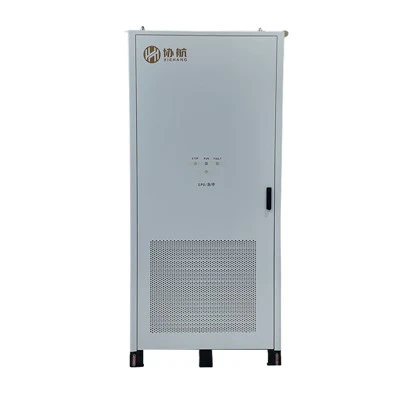
First, let’s get the most obvious risk out of the way: thermal runaway in lithium-ion batteries, which is the most common type of cell used in HESS right now. You’ve probably heard horror stories over the years—laptop batteries catching fire, e-bikes turning into infernos, that one time a hoverboard burned a garage to the ground. Lithium-ion batteries work by shuttling lithium ions between positive and negative electrodes, and if something goes wrong—if the battery is damaged, overcharged, or manufactured with a tiny flaw—those ions can start to pile up, build too much heat, and ignite the flammable electrolyte inside. What most people don’t know is that this risk isn’t universal across all lithium-ion cells. Back when I first started in this industry, we tested cells from 12 different manufacturers, and only three met our strict thermal threshold: they didn’t ignite even when we punctured them, overcharged them to 200% of their rating, or left them in a 150°F test chamber for 72 hours. The other nine either smoked, leaked toxic fumes, or caught fire. That’s why we don’t source from just anyone—we test every cell batch for thermal stability, and that’s non-negotiable for our customers. But thermal safety isn’t just about the cells themselves; it’s about the battery management system (BMS), which is the brain of the whole system. Think of the BMS like a lifeguard for your battery. It monitors every cell’s temperature, voltage, and current 100 times a second, and if it detects even a tiny anomaly—like a cell getting 10°F hotter than the others—it shuts down the system before anything bad can happen. A bad BMS is the #1 cause of HESS issues I’ve seen in homes that bought cheap, off-brand systems. I remember a customer in Ohio a few years back who bought a system from a guy out of his basement; the BMS was so basic it only checked voltage, not temperature. A cell developed a micro-damage from shipping, and over a month, it heated up undetected until it started smoking. We replaced that system for free (we stand by our products, even when customers make bad choices) but it was a good reminder: a $50 BMS vs. a $500 BMS isn’t just a cost difference—it’s the difference between a safe system and a trip to the fire department.
Next up is electrical security, which covers two big areas: overcurrent protection and arc fault prevention. Let’s start with overcurrent, which happens when too much electricity tries to flow through your system at once. If you’ve ever had a circuit breaker trip when you ran the dishwasher and the dryer at the same time, that’s overcurrent at work. For HESS, we need even stronger protection because these systems store a lot of electricity, and if there’s a short circuit, the current can be high enough to melt wires or start a fire. That’s why our systems use UL-listed overcurrent relays and fuses that are matched exactly to the system’s size. If there’s a short, the relay cuts power in less than a millisecond—faster than you can blink. Arc faults are trickier. An arc is a spark that jumps between two electrical contacts, and even a small arc can ignite drywall, insulation, or the plastic parts of your wiring. Most people don’t know that standard circuit breakers don’t detect arc faults—they’re designed for overcurrent, not sparks. Our HESS is equipped with AFCI (Arc Fault Circuit Interrupter) technology that specifically looks for the unique signature of an arc, and it shuts down power if one is detected. We also do a lot of field testing here: every system we install gets a pre-activation test where we simulate different types of arcs—both from internal wiring and from loose connections inside the battery pack—and the AFCI trips every time. One thing I always tell customers: if someone tells you their HESS is “just like a big car battery,” walk away. Car batteries put out DC power at low voltage, but HESS systems often have voltages of 48V or higher (some go up to 800V for whole-home systems), and that’s a level that can cause serious electrical shock, even if you’re not grounded properly. We install every system with dedicated grounding rods that are tested to meet local electrical codes, and we make sure all wiring is sealed in conduit to prevent accidental contact. We also include a manual disconnect switch right outside the breaker panel, so if you ever need to work on the system, you can cut all power to it with one flip—no need to fumble around inside the battery pack.
Physical security is another layer that a lot of customers don’t think about until it’s too late. I’m not talking about keeping people from taking the system—though that’s a thing, especially if you live in an area with high theft rates of copper and electronics. I’m talking about keeping the system away from hazards in your home. For example, you should never install a HESS in a closet with little ventilation, right next to a water heater, or near any flammable materials like paint cans or gasoline. We have installation guidelines that explicitly warn against these spots, and our installers will talk you through choosing the best location—usually a well-ventilated garage wall, a shed with proper airflow, or a closet with at least 12 inches of clear space on all sides. We also make our battery packs with heavy-duty steel enclosures that are UL-listed for indoor and outdoor use, so a small falling object (like a ladder or a piece of drywall) won’t puncture them. We also design them with temperature control built in—our systems have a small heating and cooling system that keeps the battery within its optimal operating range (between 32°F and 104°F) no matter what the weather is like outside. That’s not just for performance; extreme cold can make lithium-ion cells degrade faster, but extreme heat is a big thermal risk factor. Last year, we installed a system for a customer in Arizona who tried to put his battery pack in a south-facing windowless closet. Our installer talked him out of it, because the closet would have gotten to 130°F in the summer. He put it in the back of his garage, where it’s shaded and gets cross ventilation, and he’s been happy ever since—no performance issues, no safety concerns. We also work closely with local fire departments in every area we serve. A few years ago, we started sending our installers to fire department training sessions to show them how our systems work, where the disconnect switches are, and how to safely approach a HESS if there’s ever an incident. That’s important because most firefighters don’t have a lot of experience with home energy storage, and having a quick reference for our system can help them respond safely, not just to our systems but to all HESS in their area.
Cybersecurity is a new security aspect that’s become way more important as smart home technology has gotten bigger. These days, most HESS are connected to the internet, so you can check your battery level on your phone, adjust charging times, and get alerts if there’s a problem. But that connection can be a vulnerability if it’s not secured properly. A few years back, there was a story about a hacker taking over a smart thermostat, and people started worrying that their HESS could be hacked too. We take this extremely seriously. Our systems use end-to-end encryption for all data—so no one can intercept the data between your battery and your phone. We also update the BMS software remotely, but we never push updates automatically without sending you an alert first, and you can choose when to install them. We also don’t store any of your personal data—just the necessary data to make the system work, and that data is anonymized for our own performance tracking. We also don’t give third parties access to your system without your explicit permission. I’ve had customers ask me, “What if someone hacks my battery and drains all my power in the middle of the night?” The short answer is: that’s almost impossible, because our cybersecurity protocols are tested by independent third parties every year, and we’ve never had a confirmed cyber breach on any of our systems. But we also tell customers that if they ever see anything unusual—like a random alert they don’t understand, or their battery draining when no one is home—they can reach out to our 24/7 support team, and we’ll look into it within 15 minutes, no questions asked.
Now, let’s talk about what happens if something does go wrong, because even with all these security measures, no system is 100% perfect. It’s rare—less than 0.1% of our systems have ever had a safety incident—but when it does, we respond immediately. Every system has a unique serial number, so our support team can pull up the installation records, the BMS logs, and even the location from the moment you call. We send a local service technician within 48 hours (or sooner, if it’s an emergency) to assess the issue, and we cover all parts and labor for any defects that are our fault. We also carry a $2 million product liability insurance policy, so if there’s an incident that causes damage to your home or personal property, you’re covered. I’ve seen this work firsthand: a customer in Minnesota had a rare manufacturing flaw in a single cell in his system, and the BMS caught the thermal anomaly before it could cause any damage. Our technician replaced the cell within 24 hours, and the customer never even had an outage. That’s the kind of proactive approach we take to security—we don’t just design systems to avoid problems; we build systems that can catch problems before they become problems.

I know this can feel overwhelming when you’re trying to choose a home energy storage system. There are so many brands out there, so many different features, and it’s hard to tell which ones care about safety as much as they care about sales. The truth is, the security aspects of HESS aren’t something you should compromise on. A cheap system might save you a few hundred dollars upfront, but if it’s not built with the right thermal safety, electrical protection, physical design, or cybersecurity, it could end up costing you way more in the long run—both in repair bills and in peace of mind.
Solar Energy Storage System At the end of the day, home energy storage is supposed to make your life easier, not harder. It’s supposed to keep your fridge running during a storm, lower your electricity bills, and give you confidence that your family is safe, not worry that your battery is going to cause a problem. That’s why we build our systems with security at every stage—from the cell we source to the BMS we use, from the way we install to the support we provide. If you’re thinking about adding a home energy storage system to your home, we’re here to answer all your questions, walk you through the security features of our systems, and help you find the right solution for your home and your budget. We don’t do high-pressure sales, and we never push a system that doesn’t meet our strict safety standards. If you’d like to learn more or talk through your specific needs, our team is ready to connect with you at your convenience. We’re here to help you make the right choice for your home, because that’s what home energy storage is all about.
References
- National Fire Protection Association (NFPA). "Home Energy Storage System Safety Guide." 2023.
- Underwriters Laboratories (UL). "Standard for Safety for Lithium-Ion Batteries for Energy Storage Systems." UL 1973, 2022.
- International Electrotechnical Commission (IEC). "Cybersecurity for Energy Storage Systems." IEC 62933-5-1, 2021.
- U.S. Department of Energy. "Lithium-Ion Battery Thermal Runaway Prevention for Residential Energy Storage." 2022.
- Electrical Safety Foundation International (ESFI). "Home Energy Storage: Electrical Safety Best Practices." 2023.
Zhejiang Xiehang New Energy Equipment Co., Ltd.
As one of the most professional home energy storage manufacturers and suppliers in China, our products have good reputation in the market. Please erst assured to wholesale custom made home energy storage from our factory. If you have any enquiry about cooperation, please feel free to email us.
Address: No.5 Hechen Road, Zhouwangmiao Town, Haining, Jiaxing City, Zhejiang Province, China
E-mail: dan.wu@xiehang.net
WebSite: https://www.shineonpower.com/
