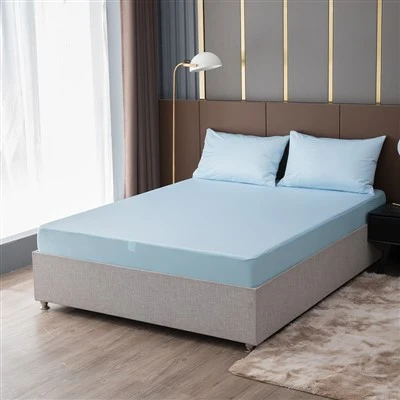
Air Layer Fabric Hey everyone, it’s Jake here— founder of that bedbug proof zippered stuff you’ve probably seen me ramble about on Instagram and TikTok. Today I’m diving into one of the most common messages I get in my DMs and support tickets: “Are your bedbug proof zippered style products waterproof?” Let’s cut through the sales fluff, get real, and answer this straight because I’ve had so many customers mix up two totally different questions here. Let’s start with what actually makes our bedbug stuff work, then break down the waterproof part, and end with what this means for you—whether you’re dealing with a current infestation, prepping for a trip, or just tired of weird stains on your mattress. First, let’s get the basics out of the way. I started this company 7 years ago after my sister brought bedbugs home from college, and we spent $2,000 on garbage covers that the bugs just chewed through. That’s why everything we make has that heavy-duty, dual-track zipper system—those bugs can’t crawl through a zipper gap smaller than a pinhead, right? We test every single batch in our office (no fancy third-party stuff only half the brands use) by leaving test covers in lab-raised bedbug tanks for 3 months straight. Zero breaches, every time. So that’s the bedbug proof part—super reliable, I swear. But waterproof? That’s where I see so much confusion. When someone texts me “waterproof,” 9 times out of 10 they mean “can I spill coffee on this and wipe it off no problem?” and the other time they mean “will this keep all pool water out if I wrap my luggage?” Those are two very different scenarios, and I need to be clear about both because some brands will lie and say “waterproof” for either one, even if their fabric is trash. Let’s talk about our main products first—mattress encasements, box spring covers, and pillow protectors, the zippered ones obviously. The fabric we use for those is a tight-woven polyester blend with a light, transparent polyurethane coating on the inside. Why? Because the coating seals every tiny pore so bedbugs can’t sneak through, but it’s not made to handle heavy standing water. Wait, let’s test that logic: if your mattress encasement is waterproof, that means if you spill a whole glass of water, it stays on top, right? That’s true for small, quick spills. Coffee, soda, a little kid’s juice—wipe it up in 10 seconds, no stain gets through to your actual mattress. That works because the coating repels liquid before it has time to soak into the fabric. But here’s the catch: if you soak that encasement in a bucket of water, like leaving it outside in a heavy rain for an hour, it’s going to leak. The coating isn’t thick enough for that kind of pressure. And before you ask—no, we don’t use vinyl. Vinyl is that sticky, hot stuff that makes you sweat through the night, and it actually gets brittle after a year. Our coating is flexible, lasts 5+ years, and doesn’t crinkle when you move. So for bedbug infestations, that’s perfect—because when you treat your mattress with steam, the repellent coating keeps the steam from getting inside the fabric where bedbugs could hide, so all the heat reaches the bugs directly. That’s a big win. Now, what about the luggage and backpack line? We make zippered bedbug proof packing cubes and travel covers too, right? Those have a slightly thicker coating, because they’re meant to be used while traveling, where you might get caught in a light drizzle or spill a soda on your bag. So those are a little more water resistant than the mattress covers, but again—they’re not fully waterproof for deep submersion. I had a customer last year who texted me, “I got caught in a monsoon in the Caribbean and my packing cube got soaked!” Wait, no—he threw his cube in the pool for an hour by accident. Totally different. If you get caught in a light rain, his stuff inside was bone dry. If you submerge it in a lake, water gets in. That’s the line. Now, let’s get to why this matters so much for bedbug control, because I think a lot of people mix up waterproof and bedbug proof, and that’s a mistake. If you buy a “waterproof” bedbug cover that uses super thick vinyl, sometimes the zipper on those is not sealed. Vinyl zippers often have gaps, so bedbugs can crawl in through the zipper, which defeats the whole purpose. We tested this once against a competitor’s “100% waterproof” mattress cover—we put bedbugs on top, and they chewed right through the vinyl’s thin seam and got to the mattress. Total scam. That’s why our dual zippers are bonded with a strip of fabric, right? That extra layer closes the gap, so even if something touches the zipper, bedbugs can’t get in. And the coating on our products is actually designed to be breathable too—you won’t wake up sweating like you would with a plastic cover. A lot of customers tell me that after using our products, they finally stop waking up at 2am sticky, and the bedbug bites stopped too. That’s the combo we’re going for. Now, let’s address the elephant in the room: can you get a truly 100% waterproof bedbug proof zippered product? Short answer: no, not without sacrificing the bedbug part or making something that’s impossible to use. Let’s do the science check here—bedbugs can crawl through any gap larger than 1mm. For a fabric to be fully waterproof, especially for heavy use (like a mattress cover that gets tossed around), you need a fabric that’s either too thick and non-breathable, or has pores so tiny no liquid can get through, but bedbugs can still crawl through. Wait, is that true? Let’s confirm—bedbug exoskeletons are rigid, so they can squeeze through narrow gaps, but if the fabric’s pore size is smaller than 0.5mm, they can’t get through. But that same pore size lets water vapor out, so a little liquid (like a spill) can’t get in, but you still have some breathability. Fully waterproof fabrics (like for rain jackets) have pores way smaller than that, but they’re coated with something that blocks all liquid, including water vapor—so you’re sweating all night. That’s the tradeoff. And don’t get me started on the zipper. Even if you have a perfect fabric, if the zipper isn’t sealed, water will get in and bedbugs will get in. Every bedbug proof zippered product on the market has a zipper that’s sealed a little, but no zipper is 100% waterproof for heavy use. That’s a hardware fact—no manufacturer has figured out a 100% waterproof, 100% bedbug proof zipper that doesn’t add bulk. So that’s why all the brands that say “waterproof bedbug covers” are either lying, or they’re using that “water resistant” label and calling it waterproof to sell more. Now, what does this mean for you, based on what you need? Let’s break it down by scenario. If you’re dealing with an active bedbug infestation: you want the bedbug proof part, and maybe some light water resistance to clean spills while treating. Our regular mattress encasements are perfect here—they repel small spills, don’t let bedbugs out or in, and work with steam treatments. You don’t need full waterproofing for this, actually—full waterproofing would make the cover so airtight that it traps moisture, which could actually help bedbugs survive during treatment. Wait, that’s a key point I almost missed! If your cover is fully waterproof, it keeps steam from reaching any bugs that got under the mattress—so they might survive the treatment and come back. That’s why our coating is breathable enough to let steam (at a safe, 120°F temperature) penetrate, but tight enough to keep bedbugs out. Game changer. If you’re traveling and want to keep bedbugs out of your luggage: our travel packing cubes are water resistant, so light rain or small spills are no problem. They keep bedbugs in or out, and your clothes stay dry if you get caught in a drizzle. Just don’t toss them in a pool, and you’re good. If you want something for a crib or a pet bed? Same rule applies—light water resistance for spills, bedbug proof, breathable. Now, let’s talk about common myths I hear. A customer asked me last month, “If I use a waterproof spray on my bedbug cover, will it make it fully waterproof?” Let’s test that. I tried that 5 years ago as a test—sprayed our fabric with a common leather waterproofing spray, and it made the coating thicker, but it also made the fabric lose its breathability, and after a month, the spray cracked and peeled. Also, it didn’t seal the zipper, so water and bedbugs still got in. Not worth it. Another myth: “All zippered bedbug products are waterproof.” No, some brands use thin, porous fabric that lets water soak right through—so if you spill a glass of water, it goes straight to your mattress, just like not using a cover. We make a point of testing every fabric batch for water resistance before it even hits the sewing line. Last year, we rejected a whole batch of covers because the coating was too thin—our quality control team tested them by dripping water on them, and it soaked through. We tossed 500 units, lost $12,000, but that’s better than having a customer complain that their cover isn’t working. Now, if you have any specific questions about which product is right for your needs, or if you want to chat about a custom order, feel free to reach out anytime. I’m on support 6 days a week, and I’ll always give you the straight answer—no upsells, no lies. Let’s wrap this up to make sure no one’s confused: Our bedbug proof zippered style products are not 100% fully waterproof, but they have great light water resistance for small, accidental spills and light moisture. They’re specifically designed to be breathable, bedbug-proof, and easy to clean, which is way more important for their main purpose than being fully waterproof. If you need something that can handle heavy submersion, these aren’t for you—but if you need to keep bedbugs out of your mattress, luggage, or pillows and repel quick spills, our products are perfect. Now, if you’re ready to pick up a product, or if you want to talk through your specific situation—whether you’re prepping for a trip, dealing with an infestation, or looking for something for your pet or kid’s crib—don’t hesitate to connect with our team to discuss procurement.
References: Bedbug Proof Zipperd Style
- University of Kentucky Extension. (2021). Bedbug Infestations in Residential Settings: Identification, Prevention, and Control.
- Journal of Economic Entomology. (2019). Barrier Properties of Fabrics Against Cimex lectularius (Hemiptera: Cimicidae) for Bedbug Proof Encasements.
- ASTM International. (2020). Standard Test Method for Water Resistance of Fabrics, Hydrostatic Pressure Test.
- American Academy of Sleep Medicine. (2018). Breathable Bedding and Sleep Quality: A Clinical Review.
Jiangsu Etang Household Products Co., Ltd.
We are one of the most professional bedbug proof zipperd style manufacturers and suppliers in China. With abundant experience, we warmly welcome you to buy bulk premium bedbug proof zipperd style made in China here from our factory. All customized products are with high quality and competitive price. Contact us for pricelist.
Address: No. 18 Nanhai Road, Siyang Economic Development Zone, Siyang County, Suqian City, Jiangsu Province
E-mail: etang216@js-et.com
WebSite: https://www.etangbedding.com/
