If you’re reading this, chances are you’ve picked up a packaged food recently—maybe a can of soda, a bottle of yogurt, a bag of preserved fruit, or a frozen dinner—and noticed a long list of ingredients you can barely pronounce. One term that pops up far more often than you might realize is “acidity regulators.” As someone who’s been in the acidity regulators supply business for over 12 years, I’ve seen firsthand how these little ingredients are misunderstood by consumers and even small food manufacturers, but what’s far more critical than consumer perception is getting their labeling right. Get this wrong, and you could face fines, product recalls, or even permanent restrictions on selling your goods. That’s why today, I’m breaking down the legal requirements for labeling acidity regulators in food, straight from the perspective of a supplier who’s navigated these rules with dozens of food brands, from artisanal bakeries to large-scale snack producers. Acidity Regulators
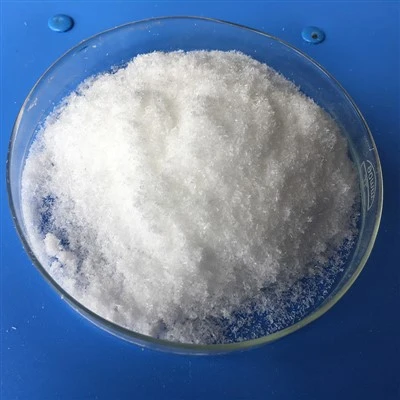
Let’s start with the basics: what even are acidity regulators, for anyone who’s not in the food industry? Acidity regulators are additives that adjust or maintain the pH level of food, controlling acidity or alkalinity. They do more than make soda taste tangy—they prevent bacteria from growing (which extends shelf life), stop fruit fillings in pies from turning mushy, balance the tartness in yogurt, and even help baked goods rise evenly. Common examples include citric acid, lactic acid, malic acid, sodium citrate, and potassium hydroxide. Without them, most of the packaged food we rely on would be unsafe, unappetizing, or spoiled within days. But because they’re additives, governments around the world have strict rules about how they’re named and listed on labels. The rules aren’t just arbitrary—they’re designed to protect consumers, especially those with food allergies or sensitivities, and to ensure transparency.
First, and most importantly, the two global frameworks that apply to nearly every food product sold internationally: the Codex Alimentarius Commission (Codex) and regional regulations in major markets like the EU, the US, Canada, and Australia-New Zealand. Codex sets international food standards to protect consumer health and ensure fair trade, so if you export food, you need to comply with Codex’s guidelines as a baseline. But many regions have their own stricter rules, so I always tell our clients that the rules in the country you’re selling to trump international standards. Let’s start with the EU, because it’s one of the largest food markets in the world and has some of the most detailed labeling laws.
In the EU, acidity regulators fall under the umbrella of food additives, governed by Regulation (EC) No 1333/2008 on food additives, along with labeling rules in Regulation (EU) No 1169/2011 on food information to consumers (FIC). The key requirement here is that acidity regulators must be labeled either by their specific common name or by their E-number. Wait, right—E-numbers. For example, citric acid is E330, lactic acid is E270, sodium citrate is E331. The EU has a positive list of approved additives, so any acidity regulator you use must be on that list, and you have to label it correctly. The rule here is that if an additive has an E-number, you can use either the common name or the E-number, but many food manufacturers choose to use both for clarity. But there’s a catch: if an acidity regulator is present in a food in what’s called a “technological function,” you still have to list it, even if it’s not a major ingredient. For example, even if you only use a tiny amount of citric acid to adjust the pH of a canned tomato sauce, it still has to be on the label. Also, the EU bans vague terms like “natural acidity regulators” or “food acid” — you have to be specific. I once had a small sauce manufacturer come to me because they tried to label citric acid as “natural acid” and got a €5,000 fine from Irish authorities. That’s a mistake anyone can make, but it’s avoidable.
Now, the US, which uses a different system under the Food and Drug Administration (FDA). In the US, acidity regulators are classified as “generally recognized as safe” (GRAS) substances, or they’re approved food additives. Unlike the EU’s E-number system, the US requires that you label acidity regulators by their common or usual name. For example, instead of E330, you have to write “citric acid” on the label. The FDA has a list of GRAS substances, and many acidity regulators are on this list, so they’re automatically approved for use. But there’s an exception for ingredients that are sold as “processing aids” — wait, no, acidity regulators are almost never processing aids, because they actually end up in the final food product. The key rule in the US is that if the acidity regulator is present in the finished food, it must be labeled. There’s also the Nutrition Facts panel, but acidity regulators don’t have to be listed there unless they have a nutritional role, which they usually don’t. But one thing to note: the US requires that if an acidity regulator is derived from a common allergen, you have to label that. For example, if citric acid is made from wheat, you have to state that it’s derived from wheat, right next to the citric acid name. That’s a common point of confusion for manufacturers, because many suppliers don’t disclose the source of their additives unless you ask. As an acidity regulator supplier, we always provide a full Certificate of Analysis (CoA) that includes the source of every additive we sell, so our clients can easily check if they need to add allergen labeling.
Next, let’s talk about Canada, which aligns partially with the US and the EU. The Canadian Food Inspection Agency (CFIA) requires that acidity regulators be labeled by their common name, and they also allow E-numbers as an alternative, similar to the EU. Canada also has a list of approved additives, called the List of Permitted Food Additives, so you can only use acidity regulators on that list. A specific rule in Canada that’s different from the US: if an acidity regulator is used in a food that’s marketed as “low acid” or “reduced acid,” you have to add a statement that the acidity regulator is used to adjust the pH. That’s a specific labeling requirement that many manufacturers miss. For example, if you have a low-acid baby food and you use sodium citrate to raise the pH, you have to note that on the label, otherwise it’s considered misleading. That’s a key point for anyone selling into Canada, because it’s not a rule you’ll find in the US or EU.
Australia and New Zealand, under Food Standards Australia New Zealand (FSANZ), have a system that’s similar to the EU. Acidity regulators are listed in the Standard 1.3.1 – Food Additives, and they can be labeled by their common name or their Australia New Zealand (ANZ) number, which is similar to E-numbers. For example, citric acid is ANZ 330, same as E330. FSANZ also requires that additives be labeled if they perform a technological function, which acidity regulators always do, so there’s no exception for small amounts. One unique rule here: if you use an acidity regulator that’s also a vitamin, like ascorbic acid (vitamin C, which is also an acidity regulator), you can label it either as ascorbic acid or as vitamin C, but not both. Wait, no—actually, you have to label it as its additive name, but you can add the common name in parentheses if you want. For example, “ascorbic acid (vitamin C)” is allowed, but “vitamin C” alone is not, because it’s also classified as an acidity regulator. That’s a small nuance, but it’s easy to get wrong if you’re not familiar with FSANZ rules.
Now, there are some cross-regional rules that apply no matter where you sell. First, the “declaration order” rule. In nearly all major markets, food additives, including acidity regulators, must be listed in descending order of weight. That means the acidity regulator that’s used in the largest quantity comes first in the ingredient list, and the one used in the smallest amount comes last. For example, if a sports drink uses citric acid (most), sodium citrate (less), and potassium citrate (least), the ingredient list will say “water, glucose, citric acid, sodium citrate, potassium citrate, natural flavors…” etc. If you list them in the wrong order, that’s considered a labeling violation, even if you spelled the names correctly. I’ve had a client who sold a line of pickles where they listed lactic acid before vinegar, because they thought lactic acid was more important, but lactic acid is used in smaller quantities than vinegar. They got a fine from the UK FSA (Food Standards Agency) because of that. It’s a small mistake, but it’s common for new manufacturers.
Another cross-regional rule: “hidden” acidity regulators. Wait, no—actually, you can’t hide additives. If an acidity regulator is part of a flavor or color additive, you still have to list it. For example, if you use a natural flavor blend that includes citric acid as an acidity regulator for the flavor, you can’t just list “natural flavors” on the label—you have to also list citric acid separately, if it’s a technological function. Wait, is that true? Let me clarify: in the EU, if a flavor contains an additive that performs a technological function outside of the flavor itself, you have to list that additive. But if the acidity regulator is only part of the flavor’s function, do you have to list it? The general rule is that any additive that is present in the final food, regardless of where it came from, must be listed. So if your natural flavor blend has citric acid to balance its own taste, and that citric acid is still present in the final soda, you have to list it in the main ingredient list. That’s a big one for manufacturers that use custom flavor blends, because many flavor suppliers don’t disclose all the additives in their blends, so you might end up with an unlabeled acidity regulator in your final product. As an acidity regulator supplier, we work closely with flavor suppliers to make sure that all additives are accounted for, so our clients don’t run into this problem.
Also, what about “organic” or “natural” labels? If you’re selling food labeled as organic, the rules for acidity regulators change even more. In the EU, organic food can only use acidity regulators that are on the EU’s organic additives list. For example, citric acid from non-GMO sources is allowed, but synthetic malic acid is not. In the US, organic food under the USDA National Organic Program (NOP) has a list of allowed additives, and acidity regulators like citric acid and lactic acid are allowed, but synthetic ones may be restricted. As a supplier, we have a full line of organic-certified acidity regulators, so if your product is organic, we can provide the necessary documentation to show that our additives meet organic standards, which makes labeling much easier.
Now, let’s talk about common mistakes I see manufacturers make all the time, because these are avoidable with the right knowledge. First, using vague terms. “Acid regulator” is not allowed in any major market—you have to name the specific additive. Second, wrong declaration order, as I mentioned earlier. Third, not disclosing allergens if the acidity regulator is derived from a common allergen. For example, if your acidity regulator is made from milk, you have to list “sodium citrate (from milk)” on the label, otherwise you could face a recall. Fourth, using an unapproved acidity regulator. Every market has a positive list, so if you use a substance that’s not on that list, even if it’s a natural ingredient, it’s illegal. For example, tartaric acid is allowed in the EU and US, but if a small manufacturer uses a lesser-known acid like alginic acid, they might find that it’s not on the positive list in their target market.
So, what does this mean for you, as a food manufacturer? The key steps are: first, know the rules for every market you sell into, because they’re not universal. Second, work with a reputable acidity regulator supplier that provides full documentation—CoAs, source information, E/ANZ numbers, organic certifications if needed. Third, double-check your ingredient list for correct naming, order, and allergen disclosures before you print labels. Fourth, stay up to date on changes in regulations, because they’re not static. For example, the EU recently updated its additive list to ban certain synthetic acidity regulators in baby food, so if you make baby food, you have to switch to an approved additive, and update your labels accordingly.
As someone who’s been supplying acidity regulators for over a decade, I’ve seen how stressful labeling mistakes can be. A friend who runs a small yogurt brand once had to recall 10,000 units of their product because they labeled sodium citrate as “natural acid” and got a notice from the FDA. It cost them thousands of dollars, damaged their reputation, and set their launch back by two months. That’s why I always tell our clients that investing in clear, compliant labeling is worth it—it’s not just a legal requirement, it’s a way to build trust with consumers. When people can see exactly what’s in their food, they’re more likely to buy from you again.
Sweeteners If you’re a food manufacturer who’s working on a new product, or you’re running into issues with labeling acidity regulators for a specific market, I’m here to help. We supply a full range of acidity regulators, from common ones like citric acid and lactic acid to specialty blends for baked goods, beverages, and frozen foods. We provide all the documentation you need to comply with regulations in the EU, US, Canada, Australia-New Zealand, and beyond, and we can help you review your ingredient list to make sure it’s fully compliant. Don’t let labeling mistakes derail your product launch or cost you fines—reach out to us to discuss your specific needs, and we’ll make sure your acidity regulator labeling meets all legal requirements.
References
- Regulation (EC) No 1333/2008 of the European Parliament and of the Council on food additives
- Regulation (EU) No 1169/2011 of the European Parliament and of the Council on food information to consumers
- U.S. Food and Drug Administration (FDA), Food Additives & GRAS Substances
- Canadian Food Inspection Agency (CFIA), Food Additives and Labelling Requirements
- Food Standards Australia New Zealand (FSANZ), Standard 1.3.1 – Food Additives
- Codex Alimentarius Commission, General Standard for Food Additives (GSFA)
Qingdao Longfeng Chemical Co., Ltd.
With abundant experience, we are one of the most professional acidity regulators manufacturers and suppliers in China. We warmly welcome you to buy bulk premium acidity regulators at competitive price from our factory. If you have any enquiry about free sample, please feel free to email us.
Address: B612, NORD PLAZA, NO.328 DUNHUA ROAD, QINGDAO, SHANDONG, CHINA
E-mail: Tony@longfengworld.com
WebSite: https://www.longfeng-chem.com/
