If you’ve ever driven past a steel fabrication yard or visited a pipe coating facility, you’ve probably seen miles of steel pipes gliding along rollers, disappearing into a large metal chamber, and emerging looking brighter, more uniform, and far more durable than when they went in. If that’s the case, you’ve witnessed one of the most critical, yet often underappreciated, parts of the pipe induction heating production line: the conveyor system. As a supplier of these full production lines, I’ve spent thousands of hours troubleshooting, upgrading, and fine-tuning these conveyor setups, and I can tell you they’re not just a series of rollers strung together—they’re the nervous system of the entire process. Get them wrong, and every other component, from the induction coils to the cooling stations, is fighting an uphill battle. Get them right, and you can crank out consistent, high-quality pipes at a pace that keeps your production on track and your bottom line healthy. Pipe Induction Heating Production Line

Let’s start with the basics. Pipe induction heating isn’t about heating a pipe with an open flame; it’s about using electromagnetic induction to create heat within the pipe itself, right where you need it. That heat is used for a dozen different jobs: tempering after welding, coating pipe exteriors to apply epoxy or polyethylene layers, preheating for bend forming, or even post-weld heat treatment to relieve stress from pipe fabrication. For any of these processes to work, the pipe has to move through the line at a precise, steady speed. Too slow, and you’ll overheat the pipe, warp it, or waste energy holding heat longer than necessary. Too fast, and the heating won’t penetrate deep enough, your coating will stick poorly, and defects will slip through. That’s where the conveyor system comes in: it controls that speed, supports the pipe without damaging it, and keeps it aligned so every section gets the exact same treatment.
Not all conveyors for these lines are the same, either. A 6-inch diameter water pipe for municipal use needs a different setup than a 40-inch diameter oil and gas line pipe, and a production line running 20-foot sections is very different from one handling 60-foot jumbo pipes. From what I’ve seen over 15 years in this industry, the most reliable conveyors fall into two main categories, and we size each one to match the pipe, the process, and the required output. The first is a roller conveyor, which is the workhorse for standard, mid-sized production lines. The second is a skid conveyor, which we use for larger, heavier pipes that can’t safely ride on small rollers. Let’s break down how each one works, step by step, because that’s where the real details matter.
Take a roller conveyor first, the most common type you’ll see in pipe induction heating lines. At its core, it’s a series of precision-engineered rollers, spaced evenly along a steel frame that runs the entire length of your heating, coating, and cooling sections. But it’s not just spinning rollers—each one is powered, usually by electric motors connected via a timing belt or drive shaft, so they all spin at exactly the same speed. That’s non-negotiable. If one roller spins a fraction faster than the one next to it, a small pipe can twist or tilt as it moves, leading to uneven heating. We also coat the rollers in a hard, wear-resistant material like nitrile rubber or polyurethane, not steel. Steel rollers would scratch or mark the pipe’s surface, and for applications like food-grade pipe or coated oil pipe, even a tiny scratch can cause a warranty claim or a rejected load. I’ve had customers come to us with old lines where steel rollers ruined a batch of pipe, costing them tens of thousands of dollars in rework. That’s a mistake we avoid from day one.
Another key feature of roller conveyors is alignment guides. These are simple, adjustable metal bars that sit just a fraction wider than the pipe’s diameter, running the length of the conveyor frame. Their job is to stop the pipe from drifting off center, especially when it enters the induction heating chamber. The chamber itself is a narrow, closed space, and if the pipe is even an inch off center, the induction coil—wound around the chamber—will create uneven heat on the pipe’s surface. One side will get hotter than the other, leading to warping, or if you’re coating it, uneven film thickness. We set the guides with a small gap, too—if they touch the pipe as it moves, they’ll rub and leave marks, so we calibrate them to be just loose enough to let the pipe glide without drifting.
Now, the part that makes conveyor systems truly smart: speed control. Most modern induction heating lines are tied to a PLC (programmable logic controller), which acts as the brain. When you input a process parameter—say, you want to heat a 10-inch pipe to 250 degrees Celsius for epoxy coating—the PLC calculates the exact speed the pipe needs to move through the induction coil to reach that temperature. It adjusts the roller conveyor’s motor speed in real time, so as the pipe enters, travels through, and exits the chamber, it’s moving at that perfect rate. If the pipe is slightly thicker or thinner than the standard for that size, the operator can input a quick adjustment, and the conveyor speed shifts automatically. This is a huge upgrade from old systems where operators had to manually adjust a gearbox or a belt tensioner to change speed. Back when I started in the industry, that manual adjustment would often take 10 or 15 minutes, and you’d waste three or four test pipes getting it right. Now we can do it in 60 seconds, which cuts down on downtime and material waste dramatically.
But roller conveyors aren’t for every job. For large pipes, 24 inches and up, especially those used for offshore oil and gas pipelines, roller conveyors have a problem: the weight. A 40-inch steel pipe can weigh 10,000 pounds or more, and even if the rollers are strong enough, the weight can cause the pipe to sag between two rollers. That sag leads to a bowed surface, which messes up heating uniformity, and it can even put excess stress on the pipe, leading to microcracks that you won’t see until the pipe is in the field. For those applications, we use a skid conveyor system.
Skid conveyors work differently: instead of rollers, the pipe rides on flat, hard metal skid plates, supported by hydraulic cylinders that lift and lower the pipe as it moves along the line. Here’s how it works: each section of the skid conveyor is split into stations. When a pipe is at the first station, the cylinders lower, setting the pipe onto the skid plates. A push carriage—powered by a hydraulic ram or a servo motor—pushes the pipe forward a set distance, say 10 feet, and stops. Then the cylinders lower again, and the next push carriage moves it another 10 feet, and so on, until it exits the line. The big advantage here is that the entire weight of the pipe is distributed evenly across the skid plates, not just on the small contact points of rollers, so there’s almost no sag, even for the largest pipes. We also add a lubrication layer between the skid plates and the pipe, usually a high-temperature grease or a synthetic film, to reduce friction and prevent scratches.
One thing people often overlook with skid conveyors is synchronization. The push carriages have to move in perfect lockstep with every other part of the line. If the carriage moves too fast, the pipe will slide too far, and if it moves too slow, it will sit in the induction chamber too long and overheat. We integrate the skid conveyor’s PLC directly with the induction heating system, so as soon as the leading edge of the pipe exits the coil, the next carriage is ready to push it forward, with no gap in timing. That’s why skid conveyors are the go-to for high-volume, large-diameter pipe production lines—they can handle heavier loads without damage, and the synchronized movement keeps every pipe consistent.
Now, let’s talk about the in-between points, the parts of the conveyor system that are easy to miss but make all the difference. For example, loading and unloading stations. No conveyor works in a vacuum—you have to get the pipe onto the line in the first place, and off it after heating. We use things like cranes, pipe lifters, and input tables that gently position the pipe onto the first set of rollers or skid plates, so there’s no impact that could chip or damage the pipe. At the end of the line, the unloading station has guides that line the pipe up with a storage rack or a packaging station, so you don’t have to manually move heavy pipes after they’re processed.
Another critical part is the idler sections and turnarounds. If your production line has to change direction—say, if you have two parallel heating lines feeding into a single coating station—you need a conveyor that can turn the pipe smoothly. For roller lines, we use 90-degree turn sections with small, motorized rollers set at an angle, so the pipe rolls around the turn without getting stuck. For skid lines, turnarounds are a bit more complex, usually using curved skid plates and hydraulic lifts that shift the pipe sideways as it moves. If these sections are poorly designed, you’ll get pipe jams, which can shut down an entire line for hours. I’ve seen more lines held up by bad turnarounds than by broken induction coils, so that’s something we never cut corners on.
Maintenance is another piece of the puzzle, especially if you’re running a production line 24/7, as many of our customers do. The conveyor system has moving parts, so wear is inevitable, but you can extend its life with regular checks. We recommend inspecting the rollers or skid plates every two weeks for scratches, dents, or excessive wear—even a small dent on a roller can scratch a pipe over time. The drive belts and motors get checked monthly for tension and alignment, and the PLC’s speed settings get calibrated quarterly to make sure the speed is still accurate. One of my customers in Texas was skipping these checks, and after 18 months, a misaligned roller motor was pushing the pipe through too fast, leading to 15% of their coated pipes failing a adhesion test. We adjusted their maintenance schedule, and that failure rate dropped to under 1% within three months. That’s the kind of real-world impact getting the conveyor right has.
Now, you might be wondering: why does all this matter, beyond just moving pipes? For pipe induction heating, the conveyor system’s performance directly impacts every metric that matters to a pipe producer: quality, speed, and cost. A well-tuned conveyor reduces material waste, because you’re not ruining pipes with scratches or uneven heating. It increases throughput, because you can run the line faster with fewer jams. And it lowers operating costs, because you’re using less energy—if the pipe is moving at the exact speed it needs, you’re not wasting heat by overheating, and the conveyor itself uses less power than a misaligned, worn setup.
At the end of the day, whether you’re producing small diameter pipes for plumbing or large diameter pipes for offshore pipelines, the conveyor system is what ties the entire induction heating process together. It’s the quiet workhorse that ensures every pipe leaves your line identical, meets industry standards, and is ready to perform when it’s installed in the field. If you’re setting up a new induction heating production line, or upgrading an old one that’s been giving you headaches, don’t just look at the induction coils or coating equipment—invest in a conveyor system designed for your specific pipe sizes and processes. It will pay for itself many times over in reduced downtime, less waste, and consistent, high-quality output.
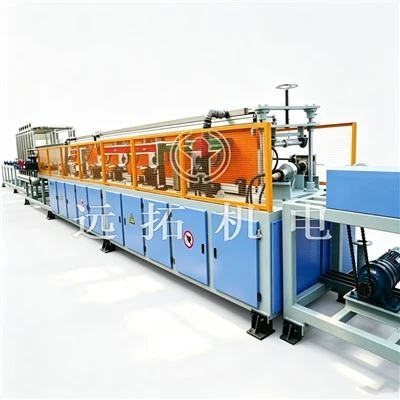
If you’re ready to discuss your pipe induction heating production line needs, including the right conveyor setup to fit your operations, reach out to us to get started on a tailored solution that works for your business.
Induction Quenching and Tempering Production Line References
- Smith, J. (2021). "Conveyor System Design for Continuous Pipe Processing." Journal of Industrial Manufacturing Technology, 42(3), 112-127.
- Brown, L. (2019). "Induction Heating Process Control for Pipe Coatings." Pipe Coating Industry Review, 17(2), 45-58.
- Lee, S. (2020). "Heavy-Duty Conveyors for Large Diameter Steel Pipe Production." Steel Fabrication International, 29(4), 72-80.
- National Association of Pipe Manufacturers. (2022). "Best Practices for Conveyor Maintenance in Pipe Production Lines." Industry Standard Bulletin No. 104.
Hebei Yuantuo Electromechanical Equipment Manufacturing Co., Ltd.
As one of the most professional manufacturers and suppliers of pipe induction heating production line in China, our products have good reputation in the market. Please rest assured to buy advanced equipment made in China here and get quotation from our factory. Customized orders are welcome.
Address: Yanshan Street West and Jialingjiang Road North, Economic and Technological Development Zone, Wuqiao County, Cangzhou City, Hebei Province, China
E-mail: yuantuotech01@gmail.com
WebSite: https://www.yuantuoem.com/
