In recent years, the field of robotics has witnessed remarkable advancements, with hybrid robots emerging as a groundbreaking innovation at the intersection of multiple disciplines. As a supplier deeply involved in the development and production of hybrid robots, I’ve witnessed firsthand the transformative potential of various technologies in shaping the future of these intelligent machines. Among these, nanotechnology stands out as a game – changer, offering unique capabilities that are reshaping the landscape of hybrid robot design and functionality. Hybrid Robot
Understanding Hybrid Robots
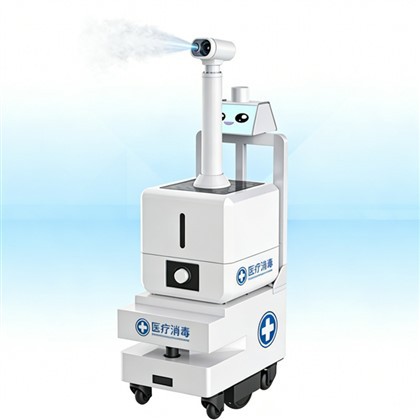
Before delving into the role of nanotechnology, it’s essential to understand what hybrid robots are. Hybrid robots combine different actuation methods, sensing mechanisms, and control strategies to achieve enhanced performance and adaptability. They can integrate the strengths of traditional rigid robots, such as high precision and strength, with the flexibility and agility of soft robots. This combination allows them to operate in diverse environments, from industrial settings to medical applications and even outer space.
Hybrid robots often consist of a variety of components, including sensors for perception, actuators for movement, and control systems for decision – making. These components need to be not only highly efficient but also miniaturized to optimize the overall size and weight of the robot, which is crucial for its mobility and energy consumption.
Nanotechnology Fundamentals
Nanotechnology involves the manipulation of matter on an atomic, molecular, and supramolecular scale, typically at dimensions between 1 and 100 nanometers. At this scale, materials exhibit unique physical, chemical, and biological properties that differ from their bulk counterparts. Some of the most notable properties include increased surface – to – volume ratio, quantum confinement effects, and enhanced mechanical strength.
These properties make nanomaterials and nanodevices highly attractive for a wide range of applications, including robotics. For example, carbon nanotubes, which are cylindrical carbon molecules with exceptional mechanical strength and electrical conductivity, have become a popular choice for many nanoscale applications.
Enhanced Sensing Capabilities
One of the most significant contributions of nanotechnology to hybrid robots is in the area of sensing. Nanoscale sensors can detect a variety of physical, chemical, and biological signals with extremely high sensitivity and selectivity. For instance, nanowire – based sensors can detect trace amounts of gases, making them ideal for environmental monitoring applications. In the context of hybrid robots, these sensors can be used to gather information about the surrounding environment, such as the presence of pollutants, temperature, humidity, and the proximity of objects.
Quantum dots, which are tiny semiconductor particles with unique optical properties, can be used as fluorescent markers for the detection of biological molecules. Hybrid robots equipped with quantum – dot – based sensors can perform complex tasks in medical and biological research, such as detecting diseases at an early stage or monitoring biological processes in real – time.
In addition to chemical and biological sensing, nanotechnology also enables the development of high – resolution tactile sensors. Nanocomposite materials can be used to fabricate flexible tactile sensors that can detect even the slightest changes in pressure, texture, and shape. These sensors are essential for the interaction of hybrid robots with the environment, allowing them to manipulate objects with precision and adapt to different surfaces.
Actuation and Mobility
Nanotechnology also plays a crucial role in the actuation and mobility of hybrid robots. Nanomaterials can be used to develop novel actuators with enhanced performance. For example, shape – memory polymers embedded with nanoparticles can exhibit faster and more precise shape changes when exposed to external stimuli, such as heat or light. These smart materials can be used in the construction of artificial muscles for hybrid robots, enabling them to mimic the movement of natural organisms.
Carbon nanotubes and graphene, with their exceptional mechanical properties, can be used to fabricate lightweight and strong micro – and nano – scale actuators. These actuators can provide high – frequency and high – force actuation, which is essential for the fast and efficient movement of hybrid robots. Moreover, the use of nanomaterials in actuators can reduce the overall weight of the robot, leading to improved energy efficiency and longer operating times.
In terms of mobility, nanotechnology can also contribute to the development of advanced locomotion mechanisms. For example, nanoscale surface engineering can be used to create superhydrophobic or super – adhesive surfaces, which can enhance the robot’s ability to move on different terrains, such as water or vertical walls.
Energy Storage and Management
Energy is a critical factor for the operation of hybrid robots, especially those designed for long – duration tasks or remote applications. Nanotechnology offers promising solutions for improving energy storage and management in these robots. Nanostructured materials can be used to develop high – energy – density batteries and supercapacitors. For example, lithium – ion batteries with nanoscale electrodes can have higher charge – discharge rates and longer cycle lives compared to traditional batteries.
Nanogenerators, which can convert mechanical energy into electrical energy, can also be integrated into hybrid robots. These devices can harvest energy from the robot’s movement, such as vibrations or bending, and use it to power the robot’s sensors and actuators. This self – powering capability can significantly extend the robot’s operating time and reduce its reliance on external power sources.
Integration and Miniaturization
One of the key challenges in the development of hybrid robots is the integration of multiple components into a compact and efficient system. Nanotechnology provides solutions for the miniaturization of sensors, actuators, and control systems, allowing for a more seamless integration of these components.
Nanoscale manufacturing techniques, such as nanoimprint lithography and self – assembly, enable the production of complex structures and devices with high precision and reproducibility. These techniques can be used to fabricate integrated circuits, sensors, and actuators on a single chip, reducing the size and weight of the robot’s control and sensing systems.
Challenges and Future Directions
Despite the numerous advantages of nanotechnology in hybrid robots, there are still several challenges that need to be addressed. One of the main challenges is the scalability of nanomanufacturing processes. While nanoscale devices can be fabricated in the laboratory, mass – producing them at a reasonable cost remains a significant hurdle.
Another challenge is the biocompatibility of nanomaterials, especially in medical applications. Some nanomaterials may have potential toxic effects on living organisms, and it is essential to ensure their safety before use in hybrid robots for medical purposes.
In the future, we can expect to see further advancements in the integration of nanotechnology and hybrid robots. The development of more sophisticated nanosensors and actuators will enable hybrid robots to perform even more complex tasks with higher precision and efficiency. Moreover, the combination of nanotechnology with other emerging technologies, such as artificial intelligence and biotechnology, will open up new possibilities for the development of intelligent and autonomous hybrid robots.
Conclusion

As a supplier of hybrid robots, I am excited about the potential of nanotechnology to revolutionize the field. The unique properties of nanomaterials and nanodevices offer unprecedented opportunities to enhance the sensing, actuation, energy management, and integration capabilities of hybrid robots. By leveraging nanotechnology, we can develop more intelligent, efficient, and adaptable robots that can meet the diverse needs of various industries.
Robot Accessories If you are interested in exploring the possibilities of hybrid robots enhanced by nanotechnology for your specific applications, I invite you to contact us for a detailed discussion. Our team of experts is ready to work with you to develop customized solutions that meet your requirements and drive innovation in your industry. We look forward to the opportunity to engage in a productive procurement negotiation and contribute to the success of your projects.
References
- Rahul Podila and Rodney S. Ruoff. "Graphene and Graphene – Based Nanocomposites: State – of – the – Art and Emerging Applications." Progress in Materials Science, vol. 56, no. 6, 2011, pp. 1121 – 1201.
- Zhong Lin Wang. "Nanogenerators for Self – Powered Electronics." Advanced Materials, vol. 22, no. 34, 2010, pp. 3276 – 3291.
- Arindam Basu, et al. "Nanotechnology for Advanced Sensors." Journal of Sensors, vol. 2019, 2019, Article ID 6215362.
Shenzhen Ezhan Technology Co., Ltd.
We’re known as one of the most reliable hybrid robot manufacturers and suppliers in China. With abundant experience, we warmly welcome you to buy bulk customized hybrid robot from our factory. If you have any enquiry about cooperation, please feel free to email us.
Address: Room 1808, 1809, 1810, Building 2, Aipark, Baolong 4th Road, Longgang District, Shenzhen City
E-mail: sales01@ezhankeji.com
WebSite: https://www.ezhanrobot.com/
