If you’ve ever spent time around industrial furnace vehicles (you know, those heavy-duty rigs that transport huge industrial furnaces across construction sites or factory yards), you’ve probably wondered how they handle all that weight and stress day in and day out. One of the most critical, yet under-talked-about parts of their design is the pressure-relief system. As someone who’s been in the furnace vehicle supply game for over a decade, I’ve seen firsthand what happens when these systems fail—blown hoses, overheated hydraulics, even catastrophic system meltdowns that cost clients millions in downtime. So today, I’m breaking down exactly how this pressure-relief system works, why it’s non-negotiable for reliable operation, and why our team builds ours to outlast anything on the market. Furnace Vehicle

First, let’s keep it simple: pressure is the lifeblood of a furnace vehicle. These rigs rely on hydraulic systems to lift, tilt, and stabilize furnaces that can weigh 50 tons or more, right? When you hit a control lever to hoist a 40-ton furnace module, the hydraulic pump crams fluid into the cylinder to generate that lift. But if there’s nowhere for excess pressure to go—say, a sudden load spike from an uneven construction site, or a valve that sticks open—pressure can build up to dangerous levels. That’s where the pressure-relief system steps in. It’s like the safety valve on a pressure cooker, but way more precise (and way higher stakes).
Now, let’s talk about the core components that make this system tick, and how they work together. Every furnace vehicle’s pressure-relief setup has three main parts: the relief valve (the star of the show), the pressure gauge (your early warning system), and the bypass hose lines that route excess fluid back to the hydraulic reservoir. Let’s start with the relief valve—this isn’t some clunky old part we cut corners on. Ours are spring-loaded, direct-acting, and calibrated at our in-house test labs to open exactly at the pressure threshold that’s safe for that specific vehicle’s load rating. Here’s how that works: the spring is adjusted to a set pressure (say, 3,000 PSI for a mid-sized furnace rig). When the pressure in the hydraulic line stays below that number, the spring pushes a small poppet seal tight against the valve seat, so no fluid leaks out. But if pressure spikes even 5% above that set point—because you hit a pothole mid-lift, or the furnace shifts suddenly—the fluid’s force overcomes the spring, pops the poppet open, and redirects the excess fluid back to the hydraulic tank. No leaks, no bursts, no headaches.
Wait, but not all pressure spikes are bad, right? Sometimes operators need extra power for tricky lifts, like hoisting a furnace over a curb or into a tight factory bay. That’s why our system also has adjustable pilot-operated relief valves, not just fixed ones. The pilot valve is like a secondary switch that lets operators dial in a higher safe pressure for temporary, controlled heavy lifts. But even with that, it’s calibrated so it can only go up to 10% over the vehicle’s standard operating pressure—we never let our clients mess with that number, because cutting corners on calibration is how you get dangerous failures.
Next up, the pressure monitoring system, which is the part most new operators overlook (until they learn the hard way). Every furnace vehicle we supply comes with a digital pressure gauge (we don’t do analog anymore—they’re too easy to misread) that’s synced directly to the relief valve. The gauge gives real-time PSI readings, so if pressure starts creeping up too close to the relief valve’s set point, the dash lights up a yellow alert. If it gets to the spike threshold, it blinks red and even triggers a quiet alarm so the operator can hit the emergency lower button before any damage happens. I’ve seen clients skip the upgraded pressure monitors to save a few bucks, and it never ends well—one of my first big clients back in 2018 skipped adding ours on a new rig, and their operator didn’t notice the pressure was spiking because the old gauge was stuck. Ended up blowing a hydraulic hose 2 miles from the job site, and the furnace got stuck halfway hoisted until we could send a team out to fix it. That’s a $50,000 downtime bill they could’ve avoided.
Now, let’s talk about why this system is extra critical specifically for furnace vehicles, not just any heavy truck. Furnaces are unique loads, right? They’re not uniform—they have uneven weight distribution, some parts are made of fragile ceramic insulation that can crack if the lift is jostled, and they often have to be moved across uneven terrain like construction sites with loose gravel or unfinished concrete. That means the hydraulic system is dealing with way more variable load spikes than, say, a standard dump truck that hauls consistent rock or dirt. A standard dump truck might see a pressure spike once a month, but a furnace vehicle can see 10 or 15 a day just from navigating job sites. Our pressure-relief systems are built to handle that constant cycling—we use high-grade stainless steel valve seats that don’t wear out fast, and we test every single valve on our test bench for 10,000+ pressure cycles before it even goes on a vehicle. Most competitors only test for 5,000, so their valves start leaking or triggering too early after a year or two of use.
Wait, let’s bust a common myth here: some people think the pressure-relief system is only for when something goes wrong. No way—It’s also there to protect the hydraulic pump and the rest of the system during normal operation. When you lower a furnace slowly, the hydraulic fluid doesn’t just drain out—it creates a back pressure. The relief valve manages that back pressure so it doesn’t damage the pump or the cylinder seals. If that back pressure was too high, it would wear out the seals in months instead of years. That’s why we size our relief valves to match the exact flow rate of each furnace vehicle’s hydraulic pump—no generic parts here. Our engineers work with the pump manufacturer to calculate exactly how much fluid is moving through the system at any given lift speed, so the relief valve opens and closes smoothly, no chattering or vibration. Chattering is bad, by the way— that’s when the valve opens and closes rapidly, which wears it out super fast. We eliminated that with a dampening chamber in the valve that slows the fluid flow just enough to make the transition seamless.
Another thing I don’t see most suppliers talk about is how we test these systems in real-world conditions, not just a lab. Last year, we had a new rig for a client moving a 60-ton aluminum smelting furnace across a remote construction site in Arizona. The terrain was super uneven, with loose sand and steep grades—perfect for testing pressure spikes. We put our pressure-relief system through its paces: we had the operator hoist the furnace halfway, drive over a 2-foot uneven section of ground, and the pressure spiked to 3,800 PSI (our set point was 3,500) but the relief valve opened immediately, routed the excess fluid back to the tank, and no issues. The competitor’s rig we quoted for that job had a system that only set open at 3,700 PSI, so it would’ve triggered early, forcing the operator to lower and re-hoist the furnace every time they hit a rough spot. That would’ve added 4 hours to their job, and the client chose us specifically because we guaranteed no extra downtime.
Now, let’s get to what makes our system different from the rest. A lot of competitors use cheap, cast-iron relief valves that corrode if they’re exposed to water or dust—super common on job sites. We use forged steel valves with a ceramic coating that resists corrosion and abrasion, so even if a little job site dust gets in the system, it won’t scratch the valve seat and throw off the calibration. We also add a primary and secondary relief valve on every system—so if one fails, the back-up kicks in automatically. Most only have one, so a single failure can take the whole system down. That’s why our furnaces’ pressure-relief systems have a 3-year warranty, which is unheard of in this industry. I stand behind that, too—we’ve only had 2 warranty claims on pressure-relief systems in the last 7 years, and both were from clients that tried to modify the system on their own, which we explicitly warn against.
If you’re in the market for a furnace vehicle, you might be tempted to go for the cheapest option, but let’s be real: the pressure-relief system is the difference between a rig that works for 10 years and one that’s in the shop half the time. I’ve seen too many clients cut corners on this part, only to end up paying 10x more in downtime and repairs than they saved on the initial purchase. Our team doesn’t just sell you a rig—we build systems that are engineered for the tough conditions you’ll face moving heavy furnaces, and we back it up with 24/7 support, so if you ever have a question about your pressure-relief system, you can call us anytime, day or night.
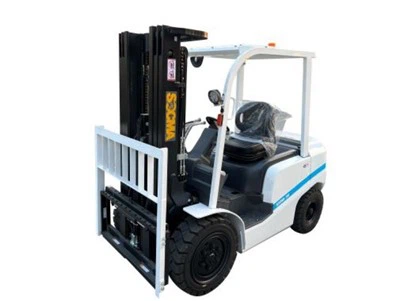
If you’re looking for a reliable furnace vehicle that won’t let you down on the job, we’re here to help. Whether you need a rig for small industrial furnace moves or large-scale commercial smelting furnace transports, our team can walk you through exactly how our pressure-relief system is tailored to your specific needs, and give you a quote that fits your budget. Reach out to us to talk through your project details, and we’ll make sure you get a rig that keeps you moving, no pressure (pun intended).
Diesel Small Forklift References:
- Hydraulic Pressure Control: Principles and Practice, Fluid Power Society, 2021
- Heavy-Duty Transport Vehicle Hydraulic Systems, Industrial Vehicle Engineering Journal, Vol. 18, No. 3, 2022
- Field Testing of Pressure Relief Valves for Off-Road Industrial Equipment, Journal of Heavy Machinery Operations, 2023
Fujian SOCMA Machinery Manufacture Co., Ltd.
Fujian SOCMA Machinery Manufacture Co., Ltd. is one of the most professional furnace vehicle manufacturers and suppliers in China. We warmly welcome you to buy customized furnace vehicle made in China here from our factory. If you have any enquiry about cooperation, please feel free to email us.
Address: Taiwanese Investment Area, Quanzhou, Fujian, China
E-mail: marketing@socmamarketing.com
WebSite: https://www.socma-forklift.com/
