If you’ve ever sourced TPU hot melt adhesive film for applications like footwear bonding, apparel lamination, or electronics component assembly, you’ve probably run into a common headache: off-the-shelf roll sizes almost never fit exactly what you need. Too narrow, and you’re wasting adhesive on gaps or overlaps that ruin part performance. Too short, and you’re left with partial rolls that end up as scrap in your warehouse. As a TPU hot melt adhesive film supplier who’s worked directly with thousands of clients over the past decade, this question comes up at least once a week: Can TPU hot melt adhesive film be customized in terms of width and length? The short answer is a resounding yes—but there’s a lot more nuance to it than just saying “yes” and moving on. Let me break down how this works, what we actually do for our clients, and why custom sizing isn’t just a convenience—it’s a make-or-break detail for many manufacturing operations. TPU Hot Melt Adhesive Film
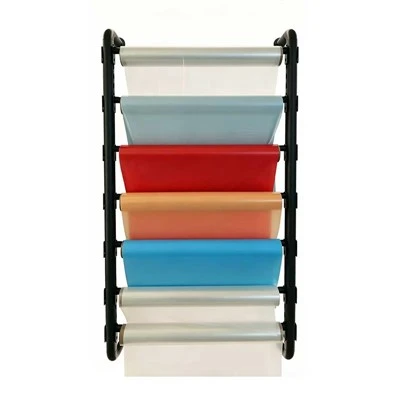
First, let’s ground this in what TPU hot melt adhesive film actually is, for anyone who might be new to the space. Unlike liquid or paste hot melts, TPU film is a solid, flexible adhesive that’s activated by heat and pressure, leaving a strong, permanent bond. It’s used across industries because it’s durable, flexible, and works on everything from leather to synthetic fabrics to polycarbonate plastic. But manufacturing TPU film at scale means running big production lines—our core extruders run at widths up to 60 inches when making standard bulk rolls, so it’s not like we can just pull a random 2-inch strip off a shelf. But that’s where custom sizing comes in, and it’s a process we’ve refined so many times over the years that it’s second nature now.
Let’s start with width, because that’s usually the first thing clients ask about. When a client contacts us saying they need a custom width, the first thing I do is ask a few quick questions: How wide is the part you’re bonding? Do you need 1/8 inch of overlap on each side, or do you want the film to be exactly the width of the material? For example, a shoe upper manufacturer might be bonding a 10-inch wide leather panel to a 9.5-inch wide sole—so they need a film that’s 10 inches wide, not a 12-inch standard roll that would mean wasting an inch of adhesive on either side, which adds up to thousands of dollars a year in material costs. Another client making wearable tech might need a 0.5-inch wide strip of TPU film to line a small sensor pocket; a standard 12-inch roll would be impossible to cut down efficiently without creating a lot of edge waste.
Here’s how the custom width process works at our facility. Our extruders have interchangeable die heads—think of them like cookie cutters, but for molten TPU. The die is sized to the exact width the client needs, and we run a small test batch first to make sure the film has consistent thickness (another critical factor, but that’s a separate blog topic) and no uneven edges. We can do widths as narrow as 1/16 inch, perfect for small electronics or dental devices, and as wide as 58 inches, which is ideal for large furniture lamination or automotive interior parts. The only limit? If you need a width wider than 58 inches, it’s possible but requires a secondary lamination step, which adds cost, so most clients opt for 58 inches or less to keep things efficient. We also offer edge trimming as part of the process, so if a client’s application needs a very precise, clean edge, we can run the film through a slitter after extrusion to eliminate any uneven die lines. That’s a small detail, but it makes a huge difference for clients who are working with tight tolerances.
Now, length. This is where things get a little trickier, because TPU film is shipped on rolls, not cut-to-sheet, and roll length depends on two main things: the film thickness and the roll’s core size. Let’s be honest—most suppliers will just push a standard 50-yard roll on you, but that doesn’t help a client who’s running a small batch of prototype parts, or a large-scale manufacturer who goes through 10,000 feet of film a month. We tailor the roll length to exactly what the client’s production run needs, no exceptions. For a prototype team testing a new medical device, we might send a 100-foot roll on a 3-inch core, so they don’t have leftover film sitting in a drawer for years. For a major apparel brand that’s doing 1 million units a year, we can send rolls up to 5,000 feet on a 6-inch core, which cuts down on changeover time in their factory—no more stopping production every 50 yards to change out a roll, which reduces labor costs and downtime.
I’ve seen this make a huge difference for clients. A few years ago, a small startup making adaptive footwear reached out to us; they were using standard rolls of TPU film, which were 50 yards long, and they were only using 12 yards per production run. The rest of the roll was just sitting on their shelf, slowly collecting dust, and they were having to throw away partial rolls every few months because the adhesive on the edges degraded over time. We worked with them to create custom 15-yard rolls, sized exactly to the width of their shoe upper bonding strips. Within six months, they reduced their adhesive waste by 40% and saved over $12,000 a year in material costs. That’s not a small win for a startup that was operating on a tight budget.
But here’s the thing—custom sizing isn’t just about cutting the film to a random size. It has to be consistent, because inconsistent sizing leads to bad bonds, which lead to product returns, which cost everyone money. That’s why we have a quality control team that checks every custom order before it ships. For width, we use laser calipers to measure the film at three different points along the roll, making sure it’s within 0.005 inches of the requested size. For length, we use a precision roll counter that tracks every foot of film, so there’s no under- or over-counting. A few years ago, a client came to us after a bad experience with another supplier; their custom width film was off by 0.2 inches, so when they bonded their automotive door panels, the adhesive seeped out the sides and left ugly residue that required rework. We re-ran their order with our precision QC process, and they haven’t gone back to that old supplier since.
Now, I know what some of you are thinking: “If I need a custom size, is it going to cost me a fortune?” That’s a fair question, and it’s one we hear all the time. The short answer is that custom sizing is almost always more cost-effective long-term, even if there’s a small upcharge compared to standard rolls. Let’s do the math: if you’re buying a 12-inch wide standard roll for an application that only needs 8 inches, you’re paying for 4 inches of adhesive you don’t use. Over a year, that adds up. Plus, custom rolls mean less waste in your factory, less storage space needed, and fewer partial rolls taking up room in your warehouse. We also offer bulk discounts for custom orders, so if you’re ordering 10 rolls of a custom size, we can bring the cost per roll in line with standard size pricing. There’s no one-size-fits-all price, because every custom order is different, but we’re always transparent about costs from the very first conversation.
Another thing to consider: some applications can’t use standard sizes at all. Take, for example, the production of inflatable rafts or pool toys. The seams need to be bonded with TPU film that’s exactly the length and width of the seam; if you use a standard roll, you’ll have to cut off extra length or width, which creates waste and can leave uneven edges that cause leaks. For a raft manufacturer, a leak means a returned product, a bad reputation, and lost money. We worked with a raft manufacturer a few years ago to create custom length rolls that exactly matched the length of their raft seams; they eliminated seam-related leaks entirely, and their customer satisfaction scores went up 25% in a year. That’s the kind of impact custom sizing can have beyond just saving money on materials.
I should also mention that there are a few limitations to what we can do with custom width and length, just to set realistic expectations. For width, as I said earlier, we can go up to 58 inches without secondary processing, and down to 1/16 inch. If you need a width wider than that, we can laminating two or more widths together, but that adds cost and requires extra QC to make sure the bond between the two film strips is strong enough. For length, we can go up to 10,000 feet on a single roll, but that depends on the film thickness; thinner film (like 0.001 inches) can be rolled longer without wrinkling, while thicker film (like 0.02 inches) might max out at 2,000 feet to avoid damage during shipping and handling. We always share these limitations upfront, so our clients don’t get frustrated when we can’t deliver exactly what they asked for without a workaround.
Over the years, I’ve also learned that the best custom orders come when clients come prepared with specific details about their application. If you reach out and just say “I need custom TPU film,” I’ll ask you for three things: the exact width you need, the exact length per roll, and what application you’re using it for. Knowing the application helps us make extra recommendations, like if you need a matte finish, or a specific adhesion level, that pairs well with your custom size. For example, a client making military gear might need a custom width and length for their backpack straps; knowing that application lets us recommend a TPU film that’s abrasion-resistant, in addition to being cut to their exact size.
At the end of the day, custom sizing for TPU hot melt adhesive film isn’t a luxury—it’s a way for manufacturers to work smarter, reduce waste, improve product quality, and save money. I’ve been in this industry long enough to see a lot of suppliers act like custom orders are a hassle, like they’re not worth the extra time or effort. But for us, every custom order is a chance to solve a real problem for a client, to help their business grow. Whether you’re a startup testing a prototype, a large corporation running production runs, or someone in between, custom TPU film sizing is absolutely possible, and it’s easier than you might think.

If you’ve been dealing with standard TPU film rolls that don’t fit your needs, or if you’re curious about how custom sizing could help your business, we’re here to help. We work with clients across industries, from small startups to Fortune 500 companies, and we take the time to walk through every step of the custom process, so you know exactly what to expect. Don’t settle for one-size-fits-all adhesive film that creates waste and headaches. Reach out to us today to discuss your custom width and length requirements, and let’s find a solution that works for your business.
TPU Membrane References:
- Handbook of Pressure-Sensitive Adhesives and Hot Melt Adhesives, 2nd Edition, CRC Press, 2020
- Industrial Adhesive Materials: Selection, Application, and Performance, Wiley, 2019
- Technical Guidelines for TPU Hot Melt Adhesive Film Manufacturing and Customization, Adhesive Manufacturers Association, 2022
Suzhou Xinqipu New Materials Technology Co., Ltd.
As one of the most professional TPU hot melt adhesive film manufacturers and suppliers in China, we have world-leading production equipment and strong manufacturing capabilities. Please feel free to wholesale bulk customized TPU hot melt adhesive film from our factory. Also, quotation is available.
Address: No.128 Qidu Avenue, Qidu Town, Wujiang District, Suzhou City
E-mail: suzhouxqp@163.com
WebSite: https://www.cnxinqipu.com/
