As a seasoned supplier in the aluminum die casting industry, I’m excited to share the detailed process of aluminum die casting. This manufacturing method has been a cornerstone in producing high – quality, complex aluminum parts for various industries, from automotive to electronics. Aluminum Die Casting
1. Designing the Die
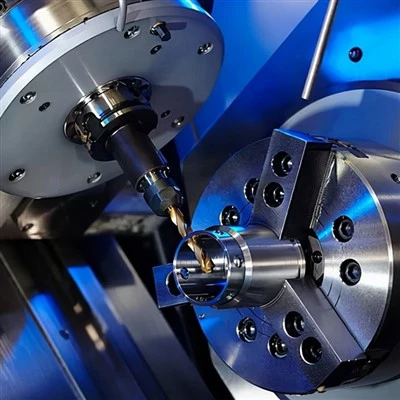
The first and arguably most crucial step in aluminum die casting is designing the die. The die is essentially a mold that gives the final shape to the aluminum part. It is usually made from high – strength tool steel because it needs to withstand the high pressure and temperature involved in the casting process.
Our team of experienced engineers starts by collaborating closely with the client. We take into account the client’s specifications, such as the part’s dimensions, tolerances, surface finish, and any special features. Using advanced 3D modeling software, we create a virtual representation of the part and the die.
Throughout the design phase, we also perform flow simulations. These simulations help us predict how the molten aluminum will flow into the die cavity. By analyzing the flow patterns, we can identify potential problems like air pockets, turbulence, and uneven filling. This proactive approach allows us to make necessary adjustments to the die design before it goes into production, saving time and cost in the long run.
2. Preparing the Aluminum Alloy
Once the die is designed, the next step is to prepare the aluminum alloy. Aluminum is chosen for die casting because of its excellent properties, including high strength – to – weight ratio, good corrosion resistance, and high thermal conductivity.
We source high – quality aluminum ingots from reliable suppliers. These ingots are then melted in a furnace at a temperature typically around 650 – 700 degrees Celsius. During the melting process, we carefully control the temperature and add specific alloying elements according to the requirements of the final part. For example, adding silicon can improve the fluidity of the molten aluminum, while magnesium can enhance the strength of the cast part.
We also conduct regular quality checks on the molten aluminum. This includes analyzing its chemical composition using spectroscopy to ensure that it meets the required standards. Any impurities or deviations from the specified alloy composition can affect the quality of the final part, so strict quality control at this stage is essential.
3. Die Casting Machine Setup
After the aluminum alloy is ready, we set up the die casting machine. There are two main types of die casting machines: hot – chamber and cold – chamber machines.
Hot – chamber machines are commonly used for alloys with low melting points, such as zinc and some aluminum alloys. In a hot – chamber machine, the melting pot is an integral part of the machine, and the molten metal is injected directly into the die cavity through a gooseneck mechanism.
Cold – chamber machines, on the other hand, are used for aluminum alloys with higher melting points. In a cold – chamber machine, the molten aluminum is ladled from an external furnace into a shot chamber. A hydraulic or mechanical plunger then forces the molten aluminum into the die cavity at high pressure.
We select the appropriate machine based on the type of aluminum alloy and the size of the part. Once the machine is chosen, we mount the designed die onto the machine. The die must be accurately aligned and securely fastened to ensure proper functioning during the casting process. We also calibrate the machine settings, such as the injection pressure, injection speed, and clamping force, according to the requirements of the part.
4. Die Casting Process
With the die casting machine set up and the molten aluminum ready, we start the actual die casting process. The process can be divided into several sub – steps:
Clamping
The first sub – step is clamping the two halves of the die together. The clamping force must be sufficient to hold the die halves firmly during the injection of the molten aluminum to prevent any leakage. The die casting machine exerts a large clamping force, which can range from a few tons to hundreds of tons depending on the size of the die and the complexity of the part.
Injection
After the die is clamped, the molten aluminum is injected into the die cavity at high pressure. The injection pressure can be as high as 10,000 – 40,000 pounds per square inch (psi). This high pressure ensures that the molten aluminum fills every corner of the die cavity, even in areas with complex shapes and thin walls. The injection speed is also carefully controlled to prevent turbulence and ensure a smooth filling process.
Cooling
Once the die cavity is filled with molten aluminum, the aluminum starts to cool and solidify. The cooling time is a critical factor in the die casting process. It needs to be long enough to allow the aluminum to fully solidify but not too long to avoid excessive shrinkage and prolong the production cycle. We use various cooling methods, such as water – cooled channels in the die, to control the cooling rate and ensure uniform solidification of the part.
Ejection
After the aluminum has solidified, the die halves are opened, and the cast part is ejected from the die. Ejection pins or sleeves are used to push the part out of the die cavity. Care must be taken during the ejection process to prevent any damage to the part. In some cases, we may use a lubricant on the die surface to facilitate the ejection of the part.
5. Post – Casting Operations
After the cast part is ejected from the die, it usually requires some post – casting operations to achieve the desired quality and finish.
Trimming
The first post – casting operation is trimming. During the die casting process, excess aluminum, known as flash, is formed around the edges of the part. Flash is a result of the molten aluminum seeping into the small gaps between the die halves. We use trimming presses or cutting tools to remove the flash from the part. This process ensures that the part has the correct dimensions and a clean appearance.
Heat Treatment
Some aluminum die – cast parts may require heat treatment to improve their mechanical properties. Heat treatment involves heating the part to a specific temperature and then cooling it at a controlled rate. This process can enhance the strength, hardness, and ductility of the part. Common heat treatment methods for aluminum die – cast parts include solution heat treatment, aging, and precipitation hardening.
Machining
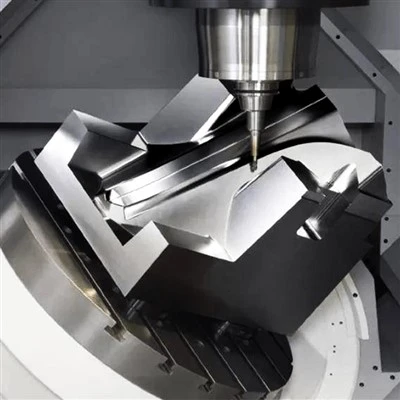
Depending on the requirements of the final part, machining operations may be necessary. Machining can be used to achieve higher dimensional accuracy, create threads, or produce special surface finishes. Common machining operations for aluminum die – cast parts include milling, drilling, turning, and grinding.
Surface Treatment
Surface treatment is another important post – casting operation. It can improve the part’s corrosion resistance, appearance, and wear resistance. Common surface treatment methods for aluminum die – cast parts include anodizing, electroplating, powder coating, and painting.
6. Quality Control
Quality control is an integral part of the aluminum die casting process. We conduct a series of inspections at various stages of production to ensure that the final parts meet the client’s requirements.
During the die design phase, we review the design for manufacturability and conduct simulations to predict potential quality issues. In the melting and alloying stage, we analyze the chemical composition of the molten aluminum to ensure its compliance with the specified standards.
After the casting process, we perform visual inspections to check for surface defects such as cracks, porosity, and flash. We also use dimensional measuring tools like calipers, micrometers, and coordinate measuring machines (CMMs) to verify the part’s dimensions. Non – destructive testing methods, such as X – ray and ultrasonic testing, can be used to detect internal defects in the part.
In addition, we test the mechanical properties of the parts, such as hardness, tensile strength, and impact resistance, to ensure that they meet the required standards. All our quality control processes are documented and traceable to ensure full transparency and accountability.
Contact Us for Aluminum Die Casting Needs
Die Casting Service If you are in the market for high – quality aluminum die – cast parts, we invite you to reach out to us. Our team of experts is ready to assist you from the initial design phase to the final delivery of the parts. We have the experience, expertise, and state – of – the – art equipment to meet your specific requirements. Whether you need a small batch of prototypes or large – scale production, we can provide you with cost – effective and reliable solutions.
References
- Campbell, John. "The die casting handbook: properties, processes, and design." Elsevier, 2013.
-ASM Handbook Committee. "Die Casting." ASM Handbook, Vol. 15, ASM International, 1988. - Groover, Mikell P. "Fundamentals of modern manufacturing: materials, processes, and systems." John Wiley & Sons, 2010.
Shenzhen Shunhaoda Technology Co., Ltd.
With abundant experience, we are one of the most professional aluminum die casting manufacturers and suppliers in China. If you’re going to buy bulk high quality aluminum die casting made in China, welcome to get free sample from our factory. Also, custom service is available.
Address: 902, Building A3, Tianrui Industrial Park, No. 35 Fuyuan 1st Road, Zhancheng Community, Fuhai Street, Bao’an District, Shenzhen
E-mail: sales@shdindustry.com
WebSite: https://www.shd-industry.com/
